











































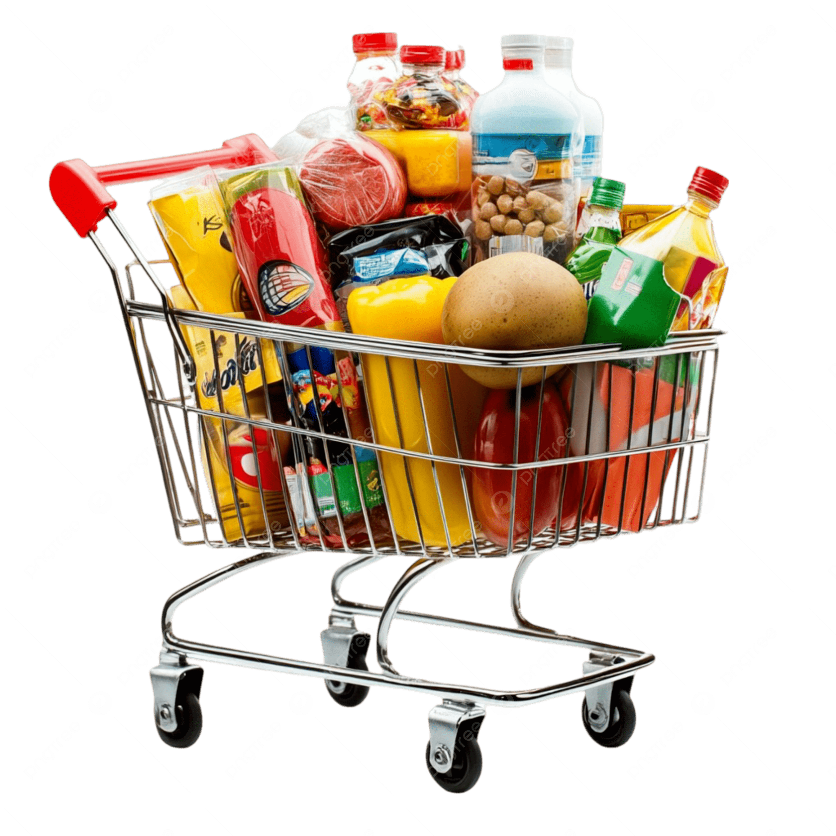
In 1937, Sylvan Goldman introduced the shopping cart, an innovation that transformed retail shopping by overcoming the capacity limits of hand-held baskets. Goldman, the owner of the Humpty Dumpty Supermarket Chain in Oklahoma City, sought to ensure that shoppers could continue browsing without needing to return frequently to the front of the store to empty baskets. Working with his employee, mechanic Fred Young, Goldman began experimenting with designs. Their first shopping cart consisted of a metal frame capable of holding two wire baskets. Inspired by the folding chair, Goldman named his invention the “folding basket carrier.” Another mechanic, Arthur Koestler later developed an assembly-line method to mass-produce the carts by forming and welding wire efficiently. The design received a patent titled Folding Basket Carriage for Self-Service Stores.
Initially, the invention was not widely accepted. Many men perceived the cart as effeminate, while some women associated it with baby carriages, leading to resistance. One woman reportedly remarked, “I’ve pushed my last baby,” expressing her reluctance to use the device. Goldman addressed this resistance by hiring male and female models to demonstrate the carts in stores, along with greeters to explain their use. Gradually, shopping carts gained popularity, and Goldman became a multimillionaire. In urban environments such as New York City, where shoppers often travel by foot or public transport, privately owned carts modelled after Goldman’s design are still widely used.
Beyond its mechanical innovation, the shopping cart also reflects powerful psychological drivers that influence consumer behaviour. Shopping itself can activate the dopamine reward system, producing feelings of pleasure like those experienced in gambling. Retailers intentionally design carts to be large because an empty-looking cart subconsciously encourages shoppers to add more items to create a sense of productivity. Research observations suggest that larger carts can increase sales by as much as 40 percent. In contrast, smaller baskets fill quickly, signalling the brain to stop shopping, whereas larger carts remove this cognitive stopping cue.
Once an item is placed into the cart, shoppers often develop a psychological sense of ownership, which aligns with the endowment effect—the tendency to value items more highly once they are possessed. Removing an item from the cart then feels like a loss, making customers more likely to complete the purchase. Impulse buying behavior is frequently driven by emotional states such as stress, boredom, or excitement, and is intensified by marketing strategies such as limited-time offers and discounts that trigger fear of missing out (FOMO).
The psychological principles behind the shopping cart have also extended into the digital marketplace. In online environments, consumers engage in “virtual window shopping,” often using digital carts as planning tools or wish lists rather than immediate purchasing mechanisms. Retailers design both physical and digital environments to encourage impulse buying through high-visibility checkout displays, appealing product packaging, and frictionless purchasing methods such as stored payment information and one-click ordering. These techniques reduce cognitive effort, making it easier for consumers to make quick decisions without careful deliberation.
Consumers also frequently purchase items to support an idealized future self or to satisfy a temporary desire for novelty. Such impulsive purchases are widespread and are estimated to account for up to 62 percent of buying decisions. Thus, the shopping cart represents not only a mechanical innovation but also a powerful psychological tool that continues to shape consumer behaviour in both physical and digital retail environments.
Conclusion
Overall, the invention of the shopping cart has transformed buyer behaviour in a positive way by making shopping easier, more comfortable, and more enjoyable. It encouraged customers to spend more time in stores, buy more products, and develop a more positive attitude toward self-service shopping. Shopping carts allowed customers to compare products easily by placing multiple items in the cart before making final decisions. This flexibility made shoppers feel more in control and confident in their choices.