





























• Home
  • Management
    • Brand Management
    • BUSINESS ETHICS
    • Financial Management
    • General Management
    • Human Resources Management
    • Information Technology Management
    • Marketing Management
    • Operations Management
    • Real heros
    • Strategic Management
  • HIGHER EDUCATION
  • Research
  • News
    • Current Affairs
    • Political affairs
  • GENERAL
    • Food & Cooking
    • Gardening
    • Health & Wellness
    • Heritage
    • Leadership
    • Literary
    • Movies & Music
    • People and Trends
    • Plants and Greenery
    • Psychology
    • Real Heroes
    • Spirituality & Meditation
    • Travel & Tourism
Dr. Vidya Hattangadi
  • Home
  • Management
    • All
    • Brand Management
    • BUSINESS ETHICS
    • Business Management
    • CORPORATE GOVERRNANCE
    • Economics
    • Financial Management
    • General Management
    • Human Resources Management
    • Information Technology Management
    • International Business
    • Marketing Management
    • Operations Management
    • PROJECT MANAGEMENT
    • Strategic Management
    • Technology Management
    Organizational structures  shape company’s value creation

    Organizational structures  shape company’s value creation

    What is Asset Specificity?

    What is Asset Specificity?

    Do you know who Owns Corporations?

    Do you know who Owns Corporations?

    Arrival of my new book on Faith Economy co-authored by Dr. Shilpa Shinde

    Arrival of my new book on Faith Economy co-authored by Dr. Shilpa Shinde

    What are Treasury Bills?

    What are Treasury Bills?

    What is SERVQUAL Model?

    What is SERVQUAL Model?

    What is Olfactory Marketing?

    What is Olfactory Marketing?

    “It all Starts with Nescafe”

    “It all Starts with Nescafe”

    The Collegial Model of Organization Behaviour

    The Collegial Model of Organization Behaviour

    Trending Tags

    • Higher Education
      Educational Leaders who fought for women’s education did not seek validations from society

      Educational Leaders who fought for women’s education did not seek validations from society

      Experiential learning is the future

      Experiential learning is the future

      How to write an appropriate title 

      How to write an appropriate title 

      Can India regain the title of Vishwaguru?

      Can India regain the title of Vishwaguru?

      What are the problems faced in online lectures?

      What impact can Knowledge have on Society?

      A Big Salute all our teachers!!!

      What is Triple Helix Model for innovation?

      Where in the world teachers are most respected?

      Trending Tags

      • Research

        Importance of Citation in Research

        What is Autoethnography style of PhD

        Can scholarly articles/papers from blogs be cited in research work?

        The complete guide on how to select the right PhD topic

        All you wanted to know out how a PhD thesis is assessed?

        Mixed Method Research is Most Suitable

        What is the difference between economic bubble and economic boom?

        How to write a Research Paper?

        Case Study is one of vital type of research

        Trending Tags

        • News
          • All
          • Current Affairs
          • Political affairs
          American Hegemony is at critical juncture 

          American Hegemony is at critical juncture 

          Impact of the Thucydides Trap and Clash of Civilization  on International Businesses

          Impact of the Thucydides Trap and Clash of Civilization  on International Businesses

          Launch of my book  titled “International Business”

          Launch of my book titled “International Business”

          Gift City is becoming India’s Capital Gateway

          Gift City is becoming India’s Capital Gateway

          The science of Psephology

          The science of Psephology

          What is the Future of BRICS Currency?

          What is the Future of BRICS Currency?

          Ram Mandir tableau graced the 75th Republic Day of India

          Ram Mandir tableau graced the 75th Republic Day of India

          The rise of  India as a Religious Tourism Destination

          The rise of India as a Religious Tourism Destination

          Why should our history be re-written?

          Why should our history be re-written?

          Trending Tags

          • General
            • All
            • Economics
            • Food & Cooking
            • Gardening
            • Health & Wellness
            • Heritage
            • Leadership
            • Literary
            • Movies & Music
            • People and Trends
            • Philosophy
            • Plants and Greenery
            • Psychology
            • Real Heroes
            • Spirituality & Meditation
            • Travel & Tourism
            Arrival of my new book on Faith Economy co-authored by Dr. Shilpa Shinde

            Arrival of my new book on Faith Economy co-authored by Dr. Shilpa Shinde

            The story behind the Swedish word Lagom which means Just Enough

            The story behind the Swedish word Lagom which means Just Enough

            Lasting friendship between R.K.Narayan and Graham Green that shaped the famous film novel ‘The Guide’

            Lasting friendship between R.K.Narayan and Graham Green that shaped the famous film novel ‘The Guide’

            Mumbai’s Historic Single Cinema Screen Maintains Brand Loyalty of Marathi Cinema Viewers 

            Why Memories are a fuel of our life

            Why Memories are a fuel of our life

            Just how Michelin Brothers’s Marketing Strategy for their Tire Business Transformed Restaurant Industry 

            Just how Michelin Brothers’s Marketing Strategy for their Tire Business Transformed Restaurant Industry 

            Why Dal-Rice is a power packed food? 

            Why Dal-Rice is a power packed food? 

            The camaraderie shared between Mohd Rafi and Kishore Kumar

            The camaraderie shared between Mohd Rafi and Kishore Kumar

            What is Brain Fog?

            What is Brain Fog?

            Trending Tags

            No Result
            View All Result
            • Home
            • Management
              • All
              • Brand Management
              • BUSINESS ETHICS
              • Business Management
              • CORPORATE GOVERRNANCE
              • Economics
              • Financial Management
              • General Management
              • Human Resources Management
              • Information Technology Management
              • International Business
              • Marketing Management
              • Operations Management
              • PROJECT MANAGEMENT
              • Strategic Management
              • Technology Management
              Organizational structures  shape company’s value creation

              Organizational structures  shape company’s value creation

              What is Asset Specificity?

              What is Asset Specificity?

              Do you know who Owns Corporations?

              Do you know who Owns Corporations?

              Arrival of my new book on Faith Economy co-authored by Dr. Shilpa Shinde

              Arrival of my new book on Faith Economy co-authored by Dr. Shilpa Shinde

              What are Treasury Bills?

              What are Treasury Bills?

              What is SERVQUAL Model?

              What is SERVQUAL Model?

              What is Olfactory Marketing?

              What is Olfactory Marketing?

              “It all Starts with Nescafe”

              “It all Starts with Nescafe”

              The Collegial Model of Organization Behaviour

              The Collegial Model of Organization Behaviour

              Trending Tags

              • Higher Education
                Educational Leaders who fought for women’s education did not seek validations from society

                Educational Leaders who fought for women’s education did not seek validations from society

                Experiential learning is the future

                Experiential learning is the future

                How to write an appropriate title 

                How to write an appropriate title 

                Can India regain the title of Vishwaguru?

                Can India regain the title of Vishwaguru?

                What are the problems faced in online lectures?

                What impact can Knowledge have on Society?

                A Big Salute all our teachers!!!

                What is Triple Helix Model for innovation?

                Where in the world teachers are most respected?

                Trending Tags

                • Research

                  Importance of Citation in Research

                  What is Autoethnography style of PhD

                  Can scholarly articles/papers from blogs be cited in research work?

                  The complete guide on how to select the right PhD topic

                  All you wanted to know out how a PhD thesis is assessed?

                  Mixed Method Research is Most Suitable

                  What is the difference between economic bubble and economic boom?

                  How to write a Research Paper?

                  Case Study is one of vital type of research

                  Trending Tags

                  • News
                    • All
                    • Current Affairs
                    • Political affairs
                    American Hegemony is at critical juncture 

                    American Hegemony is at critical juncture 

                    Impact of the Thucydides Trap and Clash of Civilization  on International Businesses

                    Impact of the Thucydides Trap and Clash of Civilization  on International Businesses

                    Launch of my book  titled “International Business”

                    Launch of my book titled “International Business”

                    Gift City is becoming India’s Capital Gateway

                    Gift City is becoming India’s Capital Gateway

                    The science of Psephology

                    The science of Psephology

                    What is the Future of BRICS Currency?

                    What is the Future of BRICS Currency?

                    Ram Mandir tableau graced the 75th Republic Day of India

                    Ram Mandir tableau graced the 75th Republic Day of India

                    The rise of  India as a Religious Tourism Destination

                    The rise of India as a Religious Tourism Destination

                    Why should our history be re-written?

                    Why should our history be re-written?

                    Trending Tags

                    • General
                      • All
                      • Economics
                      • Food & Cooking
                      • Gardening
                      • Health & Wellness
                      • Heritage
                      • Leadership
                      • Literary
                      • Movies & Music
                      • People and Trends
                      • Philosophy
                      • Plants and Greenery
                      • Psychology
                      • Real Heroes
                      • Spirituality & Meditation
                      • Travel & Tourism
                      Arrival of my new book on Faith Economy co-authored by Dr. Shilpa Shinde

                      Arrival of my new book on Faith Economy co-authored by Dr. Shilpa Shinde

                      The story behind the Swedish word Lagom which means Just Enough

                      The story behind the Swedish word Lagom which means Just Enough

                      Lasting friendship between R.K.Narayan and Graham Green that shaped the famous film novel ‘The Guide’

                      Lasting friendship between R.K.Narayan and Graham Green that shaped the famous film novel ‘The Guide’

                      Mumbai’s Historic Single Cinema Screen Maintains Brand Loyalty of Marathi Cinema Viewers 

                      Why Memories are a fuel of our life

                      Why Memories are a fuel of our life

                      Just how Michelin Brothers’s Marketing Strategy for their Tire Business Transformed Restaurant Industry 

                      Just how Michelin Brothers’s Marketing Strategy for their Tire Business Transformed Restaurant Industry 

                      Why Dal-Rice is a power packed food? 

                      Why Dal-Rice is a power packed food? 

                      The camaraderie shared between Mohd Rafi and Kishore Kumar

                      The camaraderie shared between Mohd Rafi and Kishore Kumar

                      What is Brain Fog?

                      What is Brain Fog?

                      Trending Tags

                      No Result
                      View All Result
                      Dr. Vidya Hattangadi
                      No Result
                      View All Result
                      Home Management

                      Organizational structures  shape company’s value creation

                      Dr Vidya Hattangadi by Dr Vidya Hattangadi
                      September 21, 2026
                      in Management, Strategic Management
                      0
                      0
                      SHARES
                      0
                      VIEWS
                      Share on FacebookShare on TwitterShare On Whatsapp

                      Organizational structure shape how companies coordinate work, make decisions, and create value. Value creation is the process of making something helpful or better. Companies use time, tools, and labor to build items. Customers buy these items because they solve real problems. A company cannot last if it does not offer value; buyers will go for substitution.

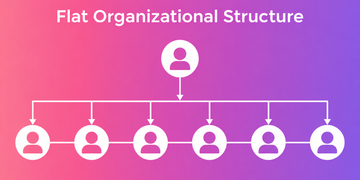
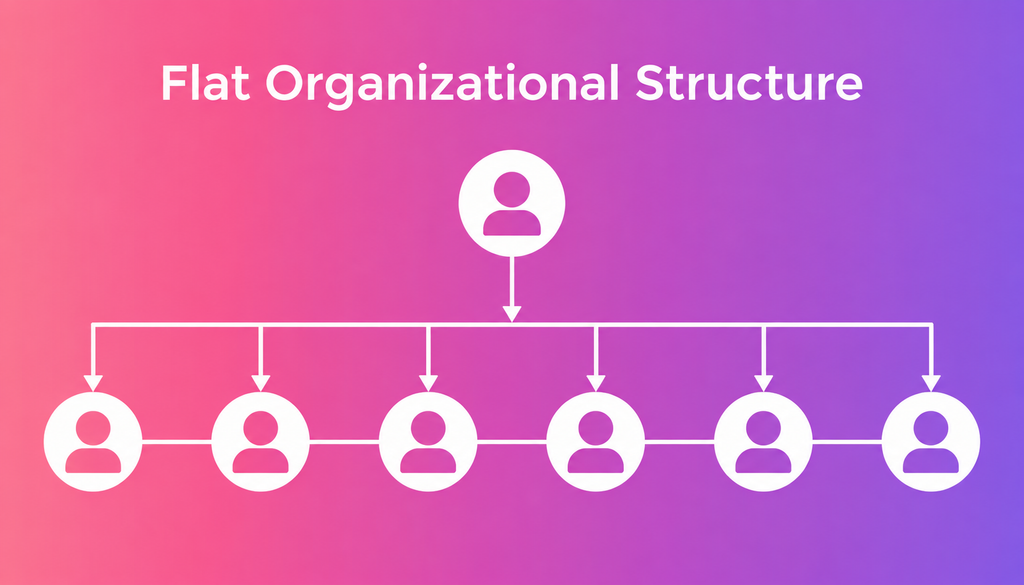
                      A flat organizational structure is characterized by few or no layers of middle management between employees and senior executives. By reducing hierarchical levels, organizations can shorten communication channels, accelerate decision-making, improve coordination, and encourage greater employee involvement. A flatter structure can therefore enhance organizational agility, innovation, responsiveness, and employee engagement, particularly in rapidly changing markets.

                      As competitive and market dynamics have evolved, several established Indian companies have sought to make their organizational structures leaner and more responsive. Companies such as Cipla, Dr. Reddy’s Laboratories, and Apollo Tyres have undertaken initiatives to reduce hierarchical layers and simplify reporting relationships. In some cases, organizations have moved from traditional structures involving eight to ten reporting layers toward considerably leaner structures of approximately three to five levels. The objective is to improve organizational agility, reduce bureaucratic delays, control costs, and strengthen competitiveness in domestic and international markets.

                      Apollo Tyres: An Illustration of a Flatter Structure

                      Apollo Tyres provides an interesting example of how a traditional manufacturing organization can move toward a flatter organizational structure. Under the leadership of Managing Director Neeraj Kanwar, the company sought to reduce conventional bureaucratic layers and create a more streamlined operating model. Its high-technology manufacturing facility at Oragadam, Chennai, has been cited as an example of a highly streamlined, four-tier organizational structure.

                      The reduction of hierarchical layers can have important cost and operational implications. Maintaining multiple levels of middle management involves expenditure on managerial salaries, benefits, offices, administrative support, and other overheads. When unnecessary layers are removed, organizations can potentially reduce these administrative costs while simultaneously improving the speed of communication and decision-making.

                      However, the principal advantage of a flat structure is not merely the reduction of managerial salaries. Middle managers can perform important functions such as coordination, mentoring, performance monitoring, conflict resolution, and implementation of organizational strategy. Therefore, the objective of flattening should be to eliminate unnecessary bureaucracy rather than eliminate management itself.

                      The resulting savings and productivity improvements can be redirected toward strategic areas such as research and development (R&D), employee development and incentives, technology adoption, process improvement, and competitive pricing. At the same time, faster communication between employees and senior management can enable organizations to respond more quickly to customer needs and market changes.

                      Thus, a flat structure can create value through a combination of lower administrative overhead, faster decision-making, greater employee autonomy, improved communication, and organizational agility. Its effectiveness, however, depends on the organization’s size, technology, managerial capabilities, employee competence, and the nature of its operations.

                      Horizontal Organization Sturcture
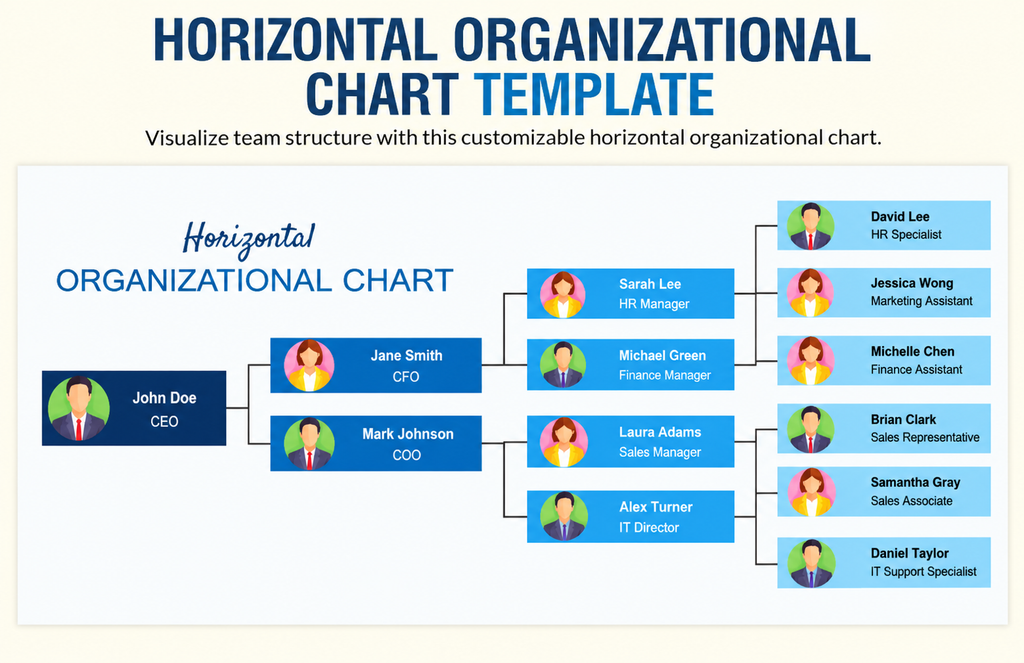
                      A horizontal organizational structure emphasizes teamwork, cross-functional collaboration, and shared accountability rather than a tall hierarchy with multiple layers of management. By reducing hierarchical barriers, organizations can accelerate decision-making, increase employee autonomy, improve responsiveness, and reduce certain administrative and operational costs.

                      Unlike traditional functional structures, where employees are organized into specialized departments such as marketing, finance, production, and human resources, a horizontal structure organizes work around core cross-functional processes and customer outcomes. Employees from different functional areas work together in self-managed or empowered teams, with a shared responsibility for delivering a specific end-to-end outcome to the customer.

                      Reduction of Inter-Departmental Friction: Horizontal structures can significantly reduce inter-departmental friction and delays. In traditional organizations, a project may move sequentially from one department to another—for example, from Design to Engineering and then to Marketing. Each transfer can create communication gaps, duplication of work, delays, and conflicts over priorities.

                      In a horizontal structure, specialists from these functions can work together as one integrated team. This reduces unnecessary handoffs and enables problems to be identified and resolved collectively at an earlier stage.

                      Customer-Centric Focus: A major advantage of horizontal organization is its emphasis on customer value rather than departmental performance alone. Teams are evaluated according to the quality and effectiveness of the outcome delivered to customers.

                      For example, instead of measuring a technology team primarily by the number of lines of code written, the organization may evaluate the team on the quality of the customer onboarding experience. This encourages employees to look beyond their individual functional responsibilities and understand how their work contributes to the complete customer journey.

                      Continuous Skill Progression: Cross-functional teamwork also promotes continuous learning and skill cross-pollination. Employees work closely with colleagues possessing different professional expertise and consequently develop a broader understanding of the organization’s activities.

                      Over time, this can create “T-shaped” professionals—employees who possess deep expertise in one area while also developing a working knowledge of other functions. Such employees are better equipped to collaborate, solve complex problems, understand the wider business ecosystem, and adapt to changing organizational requirements.

                      Example Mahindra & Mahindra provides an interesting illustration of the movement toward cross-functional product-development teams in the automotive industry.

                      In a large automotive organization, vehicle development traditionally involves several specialized functions, including research and development, sourcing, manufacturing, engineering, design, finance, and marketing. If these functions operate primarily as independent vertical silos, coordination can become complex and product-development cycles can become lengthy.

                      Mahindra’s approach to vehicle development has increasingly emphasized integrated, cross-functional collaboration, bringing different areas of expertise together around specific vehicle-development objectives. Such an approach supports closer coordination between engineering, design, sourcing, manufacturing, and marketing teams.

                      The development of products such as the XUV700 and Scorpio-N, as well as Mahindra’s expanding electric-vehicle portfolio, demonstrates the importance of integrating diverse capabilities around a common product and customer objective.

                      The broader lesson is that horizontal organization does not necessarily mean removing functional expertise. Rather, it means connecting that expertise through cross-functional teams so that employees work collectively toward a common outcome. A horizontal structure shifts the organizational emphasis from “Which department owns the task?” to “Which team is responsible for delivering the outcome?” This shift can improve speed, collaboration, innovation, employee empowerment, and customer focus.
                      Vertical organizational structure

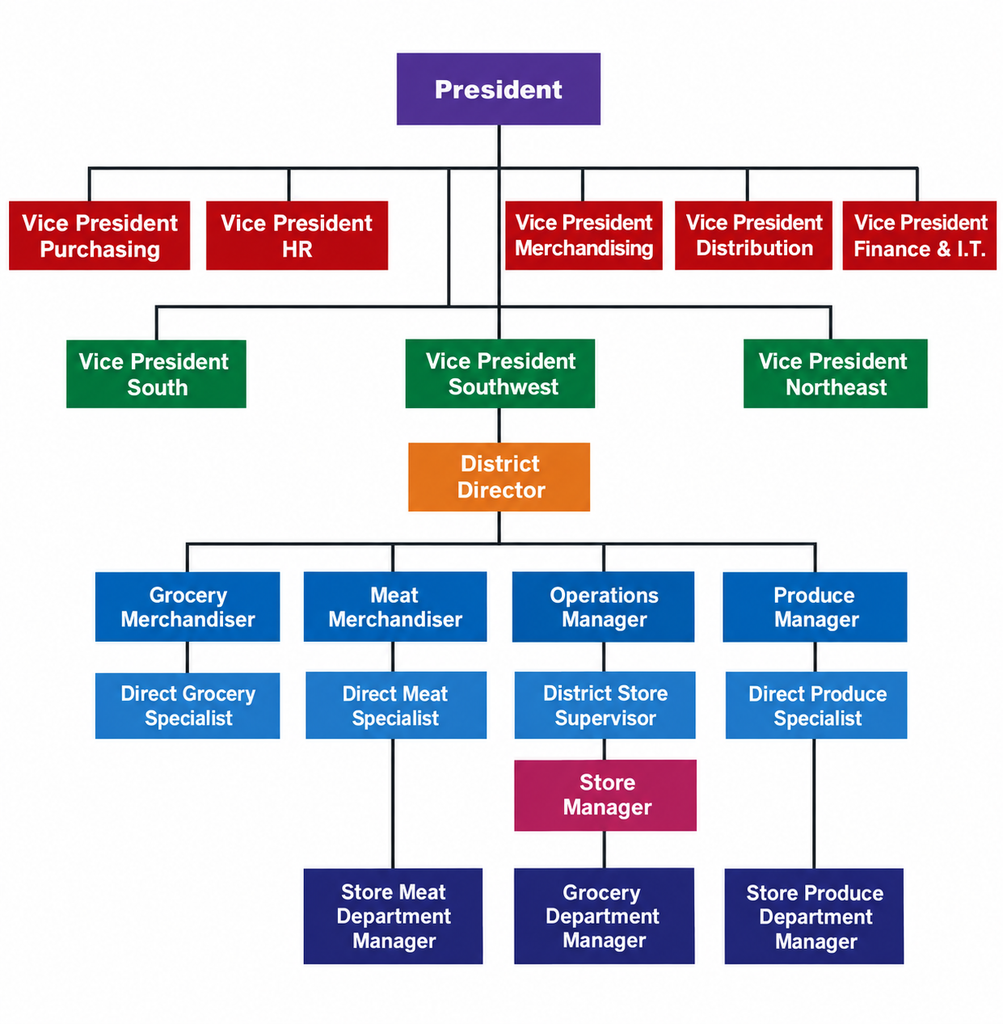
                      A vertical organizational structure is a traditional, hierarchical structure in which authority flows from the top management downward through clearly defined levels of management. It is characterized by a formal chain of command, specialized roles, centralized decision-making, and clearly established reporting relationships.

                      Vertical structures create value primarily through control, accountability, specialization, consistency, and operational stability. They are particularly appropriate for organizations that operate on a very large scale or in environments where precision, regulatory compliance, risk management, safety, and standardized procedures are critical.

                      A major advantage is the clear chain of command. Employees know whom they report to, what their responsibilities are, and who has the authority to make final decisions. Decisions may pass through several levels of supervision, allowing organizations to review risks, maintain quality standards, and ensure that established procedures are followed. This can reduce operational errors, strengthen regulatory compliance, and provide greater consistency in execution.

                      Vertical structures are also valuable when an organization has tens of thousands of employees. Without clearly defined roles and reporting relationships, such large organizations can experience confusion regarding authority and responsibility. A hierarchical structure establishes boundaries, simplifies performance evaluation, and creates accountability at every level.

                      Another important source of value is functional specialization. Employees generally work within specialized departments such as finance, human resources, marketing, operations, or technology. They are guided by managers who possess deep expertise in their respective functions. This enables organizations to develop specialized knowledge and maintain professional standards.

                      Example: State Bank of India: A prominent Indian example of a large-scale organization using a hierarchical structure is State Bank of India (SBI). Given its enormous scale, extensive branch network, large workforce, and responsibility for managing financial transactions and risks, the bank requires well-defined authority, standardized procedures, regulatory controls, and accountability.

                      For example, a branch manager cannot independently alter fundamental banking policies, risk parameters, or regulatory procedures. Such matters are governed through established organizational and regulatory hierarchies. Decisions therefore move through appropriate levels of authority, ensuring that risk, compliance, financial control, and accountability are maintained.
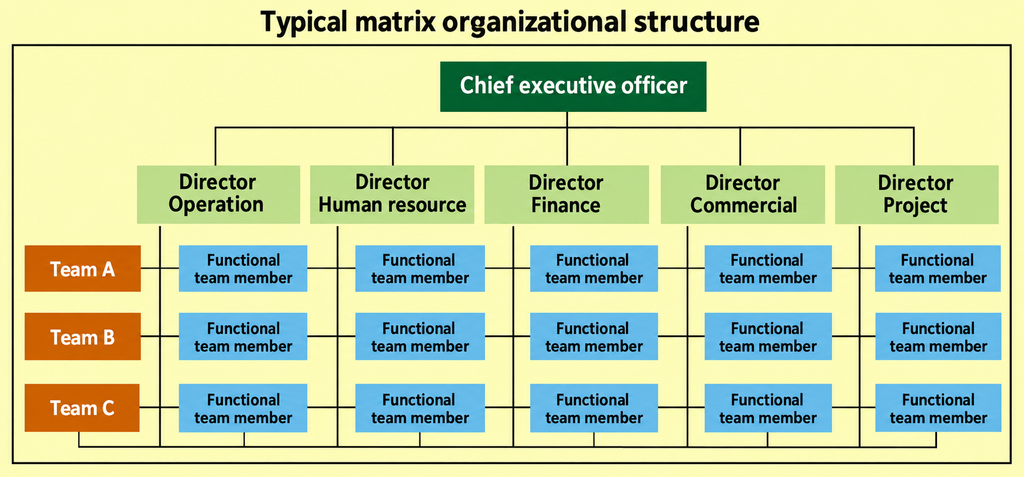
                      Matrix Structures

                      A matrix organizational structure combines the advantages of functional and divisional or project-based structures. Employees typically report to two managers—a functional manager responsible for technical expertise and professional development, and a project or product manager responsible for achieving specific project objectives.

                      The matrix structure creates value by integrating specialized expertise with project flexibility. Instead of keeping employees within isolated functional departments, organizations can share specialized talent across multiple projects according to changing strategic priorities. For example, a senior software developer may work on Project A for several months and subsequently be assigned to Project B, allowing the organization to utilize scarce expertise where it creates the greatest value.

                      The major value-creating features of a matrix structure includes: Better utilization of specialized talent across different projects. Greater flexibility in allocating employees according to business priorities. Cross-functional collaboration between technical and business teams. Faster response to changing customer and market requirements. Balance between technical expertise and project outcomes. Reduced duplication of specialized resources, which can improve cost efficiency.

                      However, the matrix structure also creates challenges. Dual reporting can produce role ambiguity, conflicting priorities, and managerial tension if the functional and project managers do not coordinate effectively. Therefore, clear authority, communication mechanisms, and performance expectations are essential.

                      Example: Tata Consultancy Services (TCS): Tata Consultancy Services provides a useful example of how matrix-like arrangements can operate in a large global IT-services organization. Its scale requires employees with specialized technological expertise to work across different industries, clients, and projects.

                      For example, a technology specialist may remain connected to a technology or functional community while simultaneously being deployed to a client engagement or industry-focused project. This enables TCS to combine deep technical expertise with industry and customer knowledge. Thus, the fundamental value proposition of a matrix structure can be expressed as: Functional expertise + project flexibility + shared resources = higher organizational adaptability and resource utilization. In simple terms: a functional structure asks, “What are you an expert in?” A project structure asks, “What project are you working on?” A matrix structure asks both questions simultaneously.

                      Tags: brand positioningBusinessCOMMUNICATIONDr. Vidya HattangadiEducationFlat organizationHierarchicalHorizontal OrganizationIndialeadershipManagementMarketingMatrix Structure OrganizationOrganizational structureProject FlexibilitySkill ProgressionVertical Organization
                      Previous Post

                      What is Asset Specificity?

                      Dr Vidya Hattangadi

                      Dr Vidya Hattangadi

                      Dr. Vidya Hattangadi is an accomplished academician, researcher, and thought leader with over four decades of combined experience 20 years in managerial roles in industry and 23 years in management education. She holds a PhD in Marketing Management from Savitribai Phule Pune University and a D.Litt. from the University of Mumbai for her post-doctoral published work. A prolific writer and blogger, Dr. Hattangadi runs the widely read blog www.drvidyahattangadi.com, which enjoys strong organic traffic and engages readers across a broad spectrum of subjects, including management, leadership, psychology, social trends, music, current affairs, and politics and psychology. Her experience of combining knowledge of industry work with an academic background creates a powerful, "pracademic" profile that bridges the gap between theoretical knowledge and practical application. This hybrid approach has made her a powerful Professor in the classrooms and she has produced graduates who are not just knowledgeable, but industry-ready. She has written a fortnightly column for The Financial Express from 2017 to 2021 and has contributed extensively to leading publications such as The Hindu, Free Press Journal, and The Economic Times. Her articles are known for their analytical depth, clarity, and relevance to contemporary issues. Dr. Hattangadi has successfully guided 24 PhD scholars in Management Studies across institutions such as the University of Mumbai, SNDT Women’s University, and Yashwantrao Chavan Maharashtra Open University (YCMOU) and Guglielmo Unimarconi Italian University. Currently, she is mentoring eight doctoral researchers in the areas of Finance, Strategic Management, Organizational Behaviour, Human Resource Management, and Marketing Management. She is an accomplished author, she has written books on Strategic Management, Buyer Behaviour, International Business and Entrepreneurship Management, contributed chapters to four edited volumes of books, and published over 350 research papers in national and international journals. Her scholarly work has strong visibility and impact, reflected in her robust presence on Google Scholar, Research Gate, Vidwan etc. Her research in all fields of management studies is truly ground-breaking. The rigor and depth of her knowledge have set a new standard in our field of management studies. She is guide and mentor to her peer, PhD scholars, and scholars from industry at large.

                      Please login to join discussion

                      © Copyright 2022 Dr. Vidya Hattangadi. All Rights Reserved.

                      No Result
                      View All Result
                      • Home
                      • Management
                        • Brand Management
                        • BUSINESS ETHICS
                        • Financial Management
                        • General Management
                        • Human Resources Management
                        • Information Technology Management
                        • Marketing Management
                        • Operations Management
                        • Real heros
                        • Strategic Management
                      • HIGHER EDUCATION
                      • Research
                      • News
                        • Current Affairs
                        • Political affairs
                      • GENERAL
                        • Food & Cooking
                        • Gardening
                        • Health & Wellness
                        • Heritage
                        • Leadership
                        • Literary
                        • Movies & Music
                        • People and Trends
                        • Plants and Greenery
                        • Psychology
                        • Real Heroes
                        • Spirituality & Meditation
                        • Travel & Tourism

                      © Copyright 2022 Dr. Vidya Hattangadi. All Rights Reserved.