














































A corporate entity is a legally recognized organization such as a corporation, limited liability company (LLC), or partnership that exists separately from its owners or shareholders. As a distinct legal person, it possesses its own legal rights and responsibilities, enabling it to enter into contracts, own property, incur debts, sue or be sued, and pay taxes independently of its owners. One of the primary advantages of this structure is limited liability, which protects the personal assets of shareholders or members from the debts and obligations of the business.
In the Indian context, corporate governance is guided by the Companies Act, 2013, particularly Section 166(2), which requires directors to act in the best interests of the company while considering stakeholders such as employees, the community, and the environment. This provision reflects a stakeholder-oriented approach to corporate governance. However, in practice, many large Indian corporations those are especially promoter-driven firms operate within a hybrid governance model, where shareholder value often remains a dominant priority alongside broader stakeholder considerations.
Insider ownership refers to the percentage of a company’s outstanding stock held by its officers, directors, and major stakeholders (typically those with >10% ownership). It acts as a key corporate governance metric indicating how aligned management’s interests are with shareholders, generally suggesting confidence in the firm’s future.
Companies such as Adani Enterprises and Adani Ports and Special Economic Zone indeed have high promoter ownership, often above 60–70%. High promoter shareholding generally implies strong alignment between promoters and shareholders, because promoters’ wealth is tied to company performance. However, governance scholars note that very high promoter concentration may also reduce minority shareholder influence, which can create governance concerns. Thus, these firms are often cited as examples of promoter-driven shareholder value models, where growth and market capitalization are strongly emphasized.
The governance structure of the Tata ecosystem is somewhat different. The holding company Tata Sons is majority owned by philanthropic trusts such as Tata Trusts. This structure traditionally promotes a stakeholder-oriented philosophy, balancing shareholder returns with social responsibility. In Cyrus Mistry v. Tata Sons, the Supreme Court of India emphasized that directors must act “in the best interests of the company”, which legally includes but is not limited to shareholder value. Therefore, Tata companies are usually described as hybrid or stakeholder-oriented rather than purely shareholder-centric, even though listed companies must still deliver returns to shareholders.
Azim Premji and the promoter entities historically held very high ownership stakes in Wipro. Promoter control exceeding ~70% can create strong alignment with shareholder wealth maximization. At the same time, Wipro also has a strong ESG and philanthropic orientation through the Azim Premji Foundation, showing that high insider ownership does not always mean a purely shareholder centric approach.
High promoter ownership in companies such as Adani Enterprises, Adani Ports and SEZ, and Wipro reflects a governance structure where promoters retain significant control, often aligning managerial decisions with shareholder value creation. However, corporate groups like the Tata Group illustrate a hybrid model where shareholder interests coexist with broader stakeholder considerations due to trust-based ownership structures.
High Promoter Ownership: More than half of the firms in the Nifty Index have insider ownership of over 50%, with 21 private-party promoters and 6 government-promoter companies in this category as of 2013, creating a, structure where shareholder interests (specifically promoters) are dominant. Banks and insurance companies, such as SBI Life Insurance Company (55.4% ownership) and HDFC Life (50.4% ownership), often focus on maximizing investor returns.
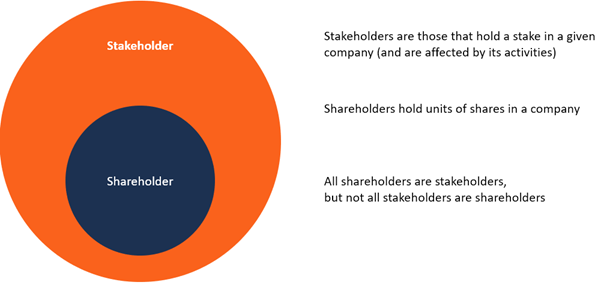
Shareholder primacy is a shareholder-centric form of corporate governance that focuses on maximizing the value of shareholders before considering the interests of other corporate stakeholders, such as society, the community, consumers, and employees.
Insider ownership refers to the percentage of a company’s outstanding stock held by its officers, directors, and major stakeholders (typically those with >10% ownership). It acts as a key corporate governance metric indicating how aligned management’s interests are with shareholders, generally suggesting confidence in the firm’s future. Includes shares held by executives, directors, founders, and entities with significant control over the company. High insider ownership is often viewed positively, suggesting that management has “skin in the game” and is invested in the company’s long-term success, potentially leading to better performance.
The debate between a shareholder approach and a stakeholder approach has been going on for a long time. Advocates of the shareholder approach stress that corporations should focus on shareholder wealth maximization, while proponents of the stakeholder approach highlight the importance of corporations as employment resources, sources of higher-quality products for consumers, and for social responsibility improvements within the general community.
Shareholder Primacy Issue
One of the primary issues in the shareholder primacy debate revolves around the idea of who owns these corporations and whether corporations are capable of being “owned.” The generally accepted view is that corporations are owned by their shareholders, who ultimately could control the company. Therefore, employees, directors, and executives are part of the corporation that must produce work to maximize shareholder wealth.
A shareholder-centric model, while providing a clear metric of success through shareholder wealth maximization, has also been widely criticized for several inherent limitations. One of the most significant concerns is that corporate decision-making may shift toward the pursuit of short-term financial gains rather than long-term sustainability. When management is evaluated primarily on stock price performance or quarterly earnings, there is a strong incentive to prioritize immediate results. This can lead to hasty decision-making, excessive risk-taking, and the adoption of strategies driven by short-term incentives such as performance bonuses or stock-based compensation.
Such short-termism attitude may discourage investments in research and development, employee training, environmental responsibility, and long-term innovation, as these initiatives often require significant upfront costs and produce benefits only over an extended period. As a result, companies may sacrifice sustainable growth and long-term value creation in favour of meeting immediate financial targets.
Another limitation of shareholder primacy is that it may overlook the interests of other important stakeholders, including employees, customers, suppliers, communities, and the environment. Corporations operate within a broader social and economic ecosystem, and decisions that solely prioritize shareholder returns may negatively affect these groups. For instance, cost-cutting measures aimed at improving short-term profitability may result in layoffs, reduced product quality, or environmental harm.
Furthermore, excessive emphasis on shareholder value can increase pressure on corporate executives to manipulate earnings or engage in aggressive accounting practices to meet market expectations. This pressure has been linked to several corporate scandals and financial instability, which intensified criticism of shareholder primacy following the 2008 global financial crisis.
In response to these concerns, many scholars and policymakers now advocate for a stakeholder-oriented approach to corporate governance, where companies balance the interests of shareholders with those of other stakeholders. This approach emphasizes long-term value creation, corporate responsibility, and sustainable business practices, aiming to ensure that corporations contribute positively to both economic growth and societal welfare. Lack of willingness to take on risks and invest in new technologies may limit the growth of corporations and the potential to improve overall well-being with better products.
More dividends paid out by corporations to provide income to shareholders instead of using the generated cash to make more and better strategic investment decisions, e.g., research and development.
Looking forward
Although numerous suggestions have been put forth to implement more of a stakeholder approach from corporations, in the end, it is a change that can only start from within. A few recommendations include reforming the countries’ codes of corporate governance and stewardship to focus more on the long-term success of companies, overhauling legislation to enforce the social and environmental duties of corporations or improving the diversity of board members. However, no matter how many regulations and laws are put in place, a genuine change away from the shareholder primacy approach can only start from within a company through its internal culture, environment, and overall business strategy. The external stakeholders of a company are customers who rely on the company for products or services and are impacted by quality and pricing. Suppliers/Vendors who depend on the company for business, revenue, and partnership. Creditors are institutions that lend money and require repayment. Community/Public at large who get affected by the company’s environmental impact, job creation, and local economic influence. Government/Regulatory Bodies are interested in tax compliance and adherence to laws and regulations.

