









































People seek validation to feel accepted, secure, and to measure their self-worth which is often rooted in basic human needs and past experiences. It’s a natural inclination stemming from the desire for social connection and fear of seclusion, but excessive reliance on external validation hinders personal growth and well-being. Constantly seeking validation can lead to an “approval addiction” when individuals prioritize the opinions of others over their own feelings and needs. When we seek approval from others, and depend on it, to feel a sense of worthiness, we build our self-esteem on a shifting, temporary foundation.
When individuals stop seeking external validation, it generally signifies an egoless person. Such people shift towards self-acceptance and self-reliance. It leads towards increased self-confidence, less anxiety, and a stronger sense of self-worth. Instead of relying on others’ opinions, they prioritize their own values and beliefs, making decisions based on internal scope rather than external pressures. People who depend on external validation are weak individuals.
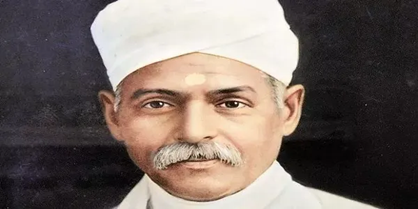
Pandit Madan Mohan Malaviya who is best known for founding the Banaras Hindu University (BHU), one of Asia’s largest residential universities. He was also a prominent figure in the Indian independence movement and a strong advocate for modern education among Indians. Additionally, he was a key leader in the Indian National Congress and founded the Hindu Mahasabha. He is best known for popularizing the slogan “Satyameva Jayate” (सत्यमेव जयते), which translates to “Truth alone triumphs”. He actively promoted this slogan, particularly during his presidency of the Indian National Congress in 1918.
it’s true that Madan Mohan Malaviya famously used a “begging bowl” to collect funds for the establishment of Banaras Hindu University (BHU). He travelled intensively, seeking donations from various individuals and organizations to realize his vision of a world-class educational institution. When Malviya visited the Nizam of Hyderabad, Mir Osman Ali Khan, for fund raising for BHU, Nizam furiously flung his slippers at Malviya because Nizam did not approve the word “Hindu” for the university. Malviya then auctioned the slippers within the Nizam’s own estate. This unconventional method, while initially met with anger from the Nizam, ultimately led to the Nizam agreeing to build the staff quarters for BHU and later making a cash donation.
By recognizing their own worth and abilities, individuals don’t care for getting criticized and they become more confident in their choices. The constant need for external validation can be a source of anxiety. When this need diminishes, such people do great societal work. They are more confident, resilient, and respectful of themselves and others. This inner sense of worth is not dependent on external validation, but rather a deep-seated understanding of their purpose of life. Such people are helpful to others around them.
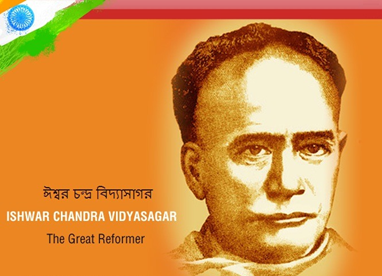
Ishwar Chandra Vidyasagar is renowned for his pivotal role in social reform, particularly concerning women’s rights and education during the Bengal Renaissance. The Bengal Renaissance was a period of significant social, cultural, and intellectual reform in 19th and early 20th century Bengal, particularly in Calcutta. It was characterized by a revitalized interest in indigenous traditions alongside the adoption of Western ideas and practices, leading to a flourishing of arts, literature, science, and social reform movements. The renaissance involved a questioning of traditional social structures, including the caste system, Sati (widow immolation), and child marriage, and a push for women’s rights and education. his period saw the rise of influential thinkers, reformers, and writers who engaged with both Indian and Western philosophical and scientific ideas.
Vidyasagar is celebrated for advocating for widow remarriage, challenging child marriage and polygamy, and promoting female education, thus leaving a lasting impact on Indian society. Vidyasagar’s life was evidence to his commitment to social justice and progress. He saw education as the key to societal betterment and worked tirelessly to make it accessible to all, regardless of caste or gender. Vidyasagar believed that education was the foundation for individual and societal development. He established schools, including the first for girls in Calcutta, and advocated for a blend of Eastern and Western educational philosophies. He also worked to simplify Sanskrit grammar for Bengali students. His purpose was to bring about positive change in society through education and social reform, leaving behind a legacy of progress and enlightenment. He never sought validation, he wasn’t primarily driven by external validation in his work, particularly in his social reforms and educational initiatives. He was motivated by a strong sense of social justice and a desire to improve the lives of others, often going against popular opinion and facing significant opposition.
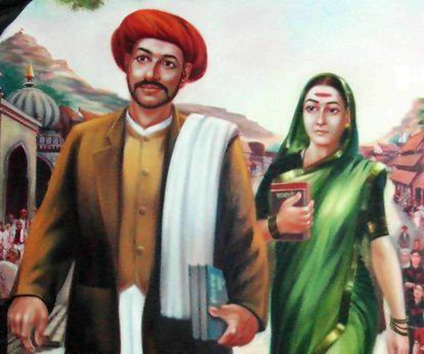
Jyotiba and Savitribai Phule were pioneers in advocating for girls’ education in Maharashtra, India during the 19th century. They established the first school for girls in India in 1848 in Pune, challenging prevailing social norms that restricted education for women. Their efforts expanded to include establishing multiple schools and educational trusts, impacting marginalized communities and fostering a more inclusive approach to education. Svitribai Phule became India’s first female teacher, she taught in the girl’s school. Without seeking validation from society. They challenged societal norms by establishing schools for girls, including those from lower castes, and fought against practices like child marriage and sati. Their work was driven by a belief in education and empowerment as tools for social change, rather than by a desire for societal approval.
Conclusion: In the pre-independence era formal education was largely inaccessible to girls, with societal norms often dictating that they be married off at a young age, making education seemed unrelated. There were many social restrictions on girls. Many families considered education for girls to be unnecessary or even harmful, fearing it might make them ambitious or discontent with their prescribed roles. Thar era saw lack of educational institutions. There were fewer schools for girls, and those that existed often focused on practical skills like needlework rather than broader academic subjects. During such setting social reformers such as Madan Mohan Malviya, Ishwar Chandra Vidyasagar and Mahatma Jyotiba Phule and his better half Savitribai Phule contributed to educate girls to make them independent. Individuals who don’t seek external validation tend to have a clearer understanding of their own values, beliefs, and goals. Without the pressure to conform to others’ expectations, individuals can be more genuine and truer to themselves. Because are less concerned with the opinions of others they can face challenges of societal norms and advocate for change.