







































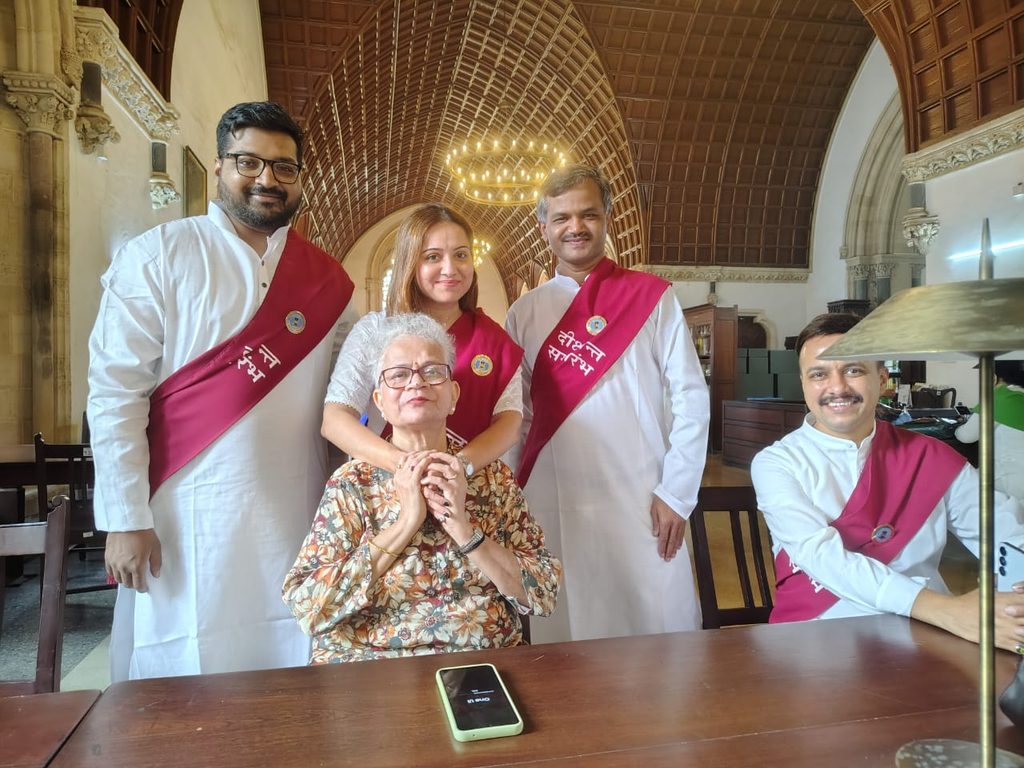
Guiding 35 research scholars to successfully complete their PhDs in Management Studies has been one of the most fulfilling milestones of my academic journey. It has been an experience that has enriched me not only as a research supervisor but also as an educator, mentor and lifelong learner.
Looking back, one of the most profound lessons I have learnt is that every research scholar is unique, with an individual personality, a distinct intellectual capacity and a different approach to research. No two scholars think alike, learn at the same pace or respond to challenges in the same way. This understanding has shaped my approach to doctoral supervision and reinforced my belief that guiding a research scholar requires much more than following a standard set of procedures.
Beyond Conventional Doctoral Supervision
Over the years, I have come to believe that doctoral supervision is a transformative process—for both the scholar and the research guide. It is not simply about helping a student complete a thesis or fulfil the formal requirements of a university. It is about nurturing an independent researcher who can think critically, question established assumptions, explore new perspectives and contribute meaningfully to the body of knowledge.
Every scholar has a different set of strengths, limitations, motivations and aspirations. Recognising these differences has required me to adapt my supervisory approach continually. With some scholars, the emphasis has been on providing direction and structure; with others, it has involved encouraging greater independence, challenging conventional thinking or helping them navigate uncertainty.
In doing so, I have also undergone my own intellectual and personal transformation. Each scholar has challenged me to reflect, learn and evolve as an academician.
The Importance of Time, Focus and Research Discipline
In today’s rapidly changing world, knowledge evolves continuously, and data has a life of its own. Research must therefore remain relevant, focused and responsive to emerging developments.
One of my key priorities has been to encourage scholars to complete their doctoral research within 36 months. This calls for careful planning, well-defined research milestones, consistent progress reviews and a clear understanding of the work required at every stage.
Early completion, however, should never come at the cost of research quality. The objective is to help scholars develop the discipline to manage their time effectively, remain committed to their research questions and move steadily towards a well-substantiated thesis.
As a research guide, I have learnt the importance of maintaining a delicate balance between giving scholars the intellectual freedom to explore and ensuring that they remain focused on their ultimate goal. At times, this means motivating them to move beyond their comfort zones, overcome delays and take ownership of their progress.
Embracing Uncertainty and the Possibility of Negative Findings
One of the most important lessons I have sought to instil in my scholars is that research does not always produce the results we anticipate.
Hypotheses may be supported, partially supported or rejected. Relationships between variables may turn out to be different from what the researcher initially expected. Such outcomes are not failures; they are integral to the research process.
I have often encouraged my scholars to embrace the creative uncertainty that comes with meaningful academic inquiry. Research requires intellectual courage—the willingness to question assumptions, examine contradictory evidence and accept findings that may challenge one’s original beliefs.
The true value of research lies not in proving that we were right from the beginning, but in discovering what the evidence actually tells us.
Helping scholars appreciate this distinction is an essential part of preparing them to become independent researchers who approach knowledge with rigour, integrity and an open mind.
Understanding the Individual Behind Every Thesis
Supervising 35 research scholars has exposed me to a wide spectrum of personalities, working styles, intellectual strengths and research orientations. Each scholar has brought a different perspective to the doctoral journey, and each has required a somewhat different approach to supervision.
Some thrive with considerable independence, while others benefit from regular guidance and reassurance. Some are quick to conceptualise ideas but need support in structuring their research; others are meticulous in execution but require encouragement to think more broadly and creatively.
A research guide must be able to recognise these differences and respond appropriately.
I strongly believe that a research supervisor must remain intellectually ahead of the scholar while being deeply invested in the scholar’s chosen area of research. This requires subject knowledge, intellectual curiosity, commitment and, above all, a genuine passion for the research process.
At the same time, being ahead does not mean having all the answers. It means being equipped to ask the right questions, challenge assumptions constructively and help scholars discover answers for themselves.
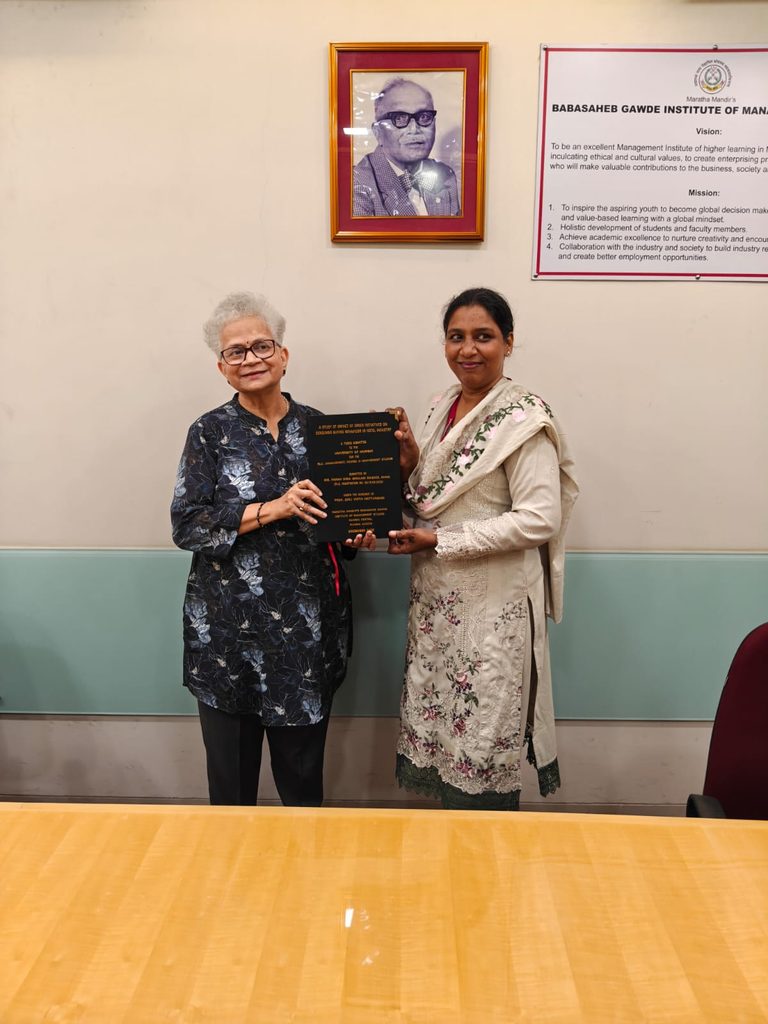
Education Is Inherently Interdisciplinary
Another significant insight from my experience is that education and research cannot be confined to rigid disciplinary boundaries.
Management Studies, in particular, draws upon psychology, sociology, economics, technology, behavioural sciences and several other fields. Understanding a management problem often requires us to look beyond the obvious and explore connections between seemingly unrelated areas of knowledge.
Working with scholars researching diverse topics has strengthened my conviction that interdisciplinary thinking is essential to meaningful academic inquiry. It encourages researchers to approach problems from multiple perspectives and develop insights that may not emerge from a single disciplinary lens.
This diversity of research interests has also broadened my own understanding and reinforced the importance of remaining open to new ideas throughout one’s academic career.
From Playful Exploration to Research Independence
A research scholar’s intellectual capacity is not static. It evolves with experience, exposure, confidence and the development of critical thinking.
The doctoral journey often begins with curiosity, enthusiasm and a sense of exploration. As the research progresses, scholars gradually come to understand the complexity of their chosen subject, the discipline required to generate credible evidence and the responsibility that comes with producing original work.
This transition—from exploratory curiosity to intellectual ownership—is one of the most important aspects of doctoral education.
My role has been to help scholars navigate this transition: encouraging curiosity in the early stages, providing structure when the research becomes demanding, and gradually stepping back as they develop the confidence and competence to make independent decisions.
The ultimate measure of successful supervision is not merely the submission of a thesis. It is the emergence of a researcher who can think independently, defend an argument, acknowledge limitations and continue contributing to knowledge beyond the doctoral programme.
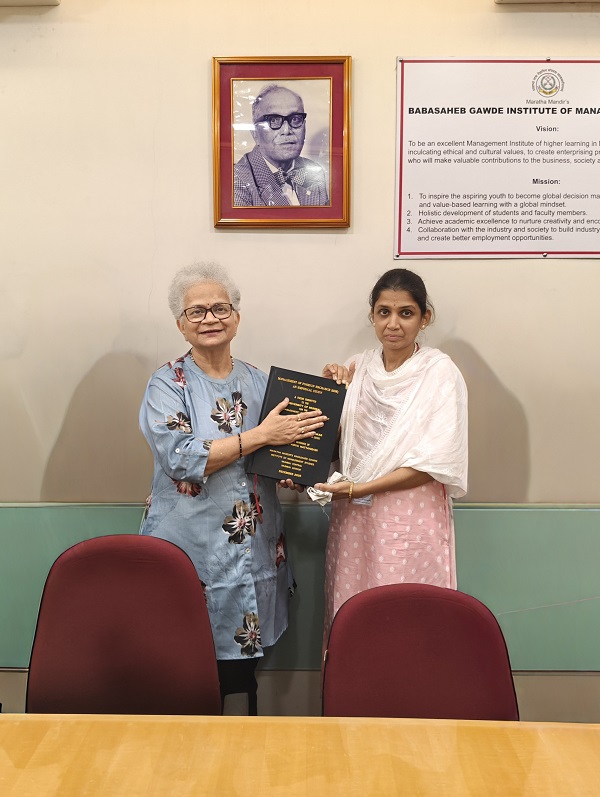
The Many Roles of a Research Guide
Perhaps the most rewarding realisation from supervising 35 scholars is that a research guide must be willing to change roles depending on the needs of the individual.
At different stages, I have found myself acting as a mentor who provides direction, a grounding force during periods of uncertainty, a counsellor when challenges seem overwhelming, a parent-like figure when reassurance is needed, and an empathetic anchor when the pressures of doctoral research become difficult to manage.
These roles cannot be prescribed in a handbook. They emerge from understanding the person behind the research and recognising that the doctoral journey is as much a human experience as it is an academic endeavour.
There are moments when a scholar needs a difficult question rather than an easy answer, a firm push rather than reassurance, or simply someone willing to listen. Knowing when to adopt each role is, perhaps, one of the most nuanced aspects of doctoral supervision.
Gratitude for an Extraordinary Journey
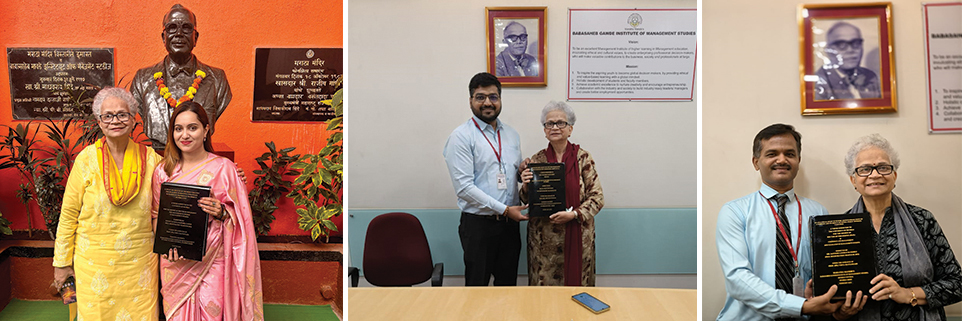
I consider it a privilege to have guided 35 research scholars, each representing a different life journey, cultural background, religion, country, university and area of research. Their diversity has enriched my experience immeasurably and reminded me that the pursuit of knowledge transcends boundaries.
I am deeply grateful to the Almighty for giving me this opportunity and for allowing me to play a part in the academic and intellectual journeys of these scholars.
Each successful PhD has been a milestone, but the experience has also left me with something far more enduring: a deeper understanding of people, a greater appreciation of diverse perspectives and a renewed commitment to education.
I began this journey as a research guide with knowledge and experience to share. Over time, I have come to realise that every scholar I have guided has also been my teacher in some way.
The true magic of successfully guiding 35 research scholars lies not merely in the number of PhDs completed, but in learning the art of becoming the guide each scholar needs – at the right time, in the right way, and with the right measure of empathy, encouragement and intellectual rigour.
That, for me, is the real achievement of doctoral supervision. And it is a journey for which I remain profoundly grateful.