











































Every song and movie often originate from a deep, personal, or imaginative story. These stories emerge from real-life events, emotional experiences, or creative inspirations that transform a simple idea into a memorable piece of art. Behind the melody of a song or the scenes of a film lies an invisible narrative that enriches its meaning.
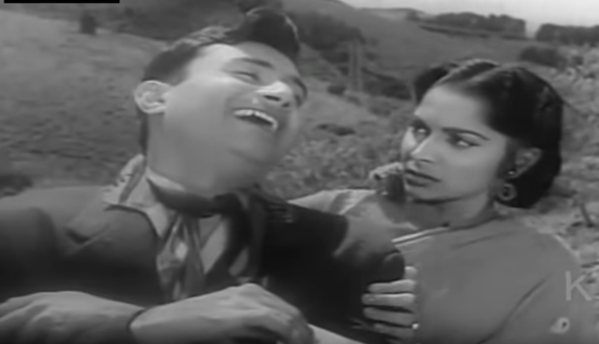
One such fascinating story lies behind the iconic song “Khoya Khoya Chand” from the film Kala Bazar (1960). The lyricist Shailendra was under immense pressure from composer S. D. Burman to deliver the lyrics quickly. At that time, Shailendra was extremely busy and had not yet found the inspiration to write the song, even when approached by the film’s producer and lead actor, Dev Anand. Days passed, and the composer grew increasingly impatient. Finally, S. D. Burman sent his son, R. D. Burman fondly called Pancham to Shailendra’s office with strict instructions not to return home without the lyrics.
According to popular legend, Shailendra had not written a single word when Pancham arrived. Instead, he made him wait the entire day, driving from one location to another while smoking cigarettes. Hours passed, daylight faded into night, and still no lyrics emerged. Around 11 p.m., when Pancham was nearly ready to give up, Shailendra asked him for a matchbox to light another cigarette. Gazing at the moonlit sky, inspiration suddenly struck. He began writing the opening lines on the foil of a cigarette pack—an act often mistakenly remembered as writing on a matchbox.
Shailendra then asked Pancham to return home and inform his father that he would arrive the next morning with the completed lyrics. That spontaneous moment of inspiration led to the creation of one of Hindi cinema’s most unforgettable melodies. The song eventually became one of the most celebrated compositions of its era, beautifully sung by Mohammed Rafi, whose voice gave life to the romantic longing captured in the lyrics.
Emotion, Imagination, and the Artist’s Inner World
Artists frequently draw upon moments that shape their inner worlds. A simple tune may carry the memory of longing, separation, or love. Creative imagination also plays a vital role. Not all songs emerge from lived experience; many arise from an artist’s ability to imagine alternate worlds, characters, and emotions. Yet even these imagined creations often reflect universal human feelings, allowing audiences to connect deeply with them.
Understanding the story behind a song or film enriches the listening or viewing experience. It transforms art from mere entertainment into an emotional and intellectual journey. When audiences learn about the inspiration behind a work, they often discover new layers of meaning that make the experience more profound and memorable.
The Musical Soul of the Song – Raag Bhimpalasi
The melody of “Khoya Khoya Chand” is based on Bhimpalasi, a soft, emotional, and deeply expressive raga associated with longing and romantic yearning.
Traditionally, Bhimpalasi is performed in the afternoon, typically between 1 p.m. and 4 p.m., rather than at midnight or early dawn. Its mood evokes introspection, love, and gentle melancholy, often resembling the emotional stillness of a warm afternoon breeze.
Bhimpalasi shares similarities with the Carnatic raga Abheri, which carries comparable melodic phrases and emotional depth. The origin of the name Bhimpalasi remains somewhat obscure. While scholars have explored linguistic and historical possibilities, there is no universally accepted explanation for its naming. What remains certain, however, is its enduring emotional power—songs composed in this raga often linger in memory long after they are heard.
Conclusion
“Khoya Khoya Chand” remains unforgettable not only because of its melody but also because of the moment of inspiration that gave birth to it. The story behind its creation reminds us that art often emerges from unexpected moments—when pressure, patience, and imagination converge. When we listen to such songs with knowledge of their origins, the experience becomes richer. The melody is no longer just music; it becomes a living story, one that connects artists, history, and listeners across generations.