





































The combination of a product and a service is a product-service hybrid. For example, the iPod and iTunes were a famous example of this approach. Yet, they were complementary hybrids – it was possible to use an iPod without iTunes and vice-versa.
Goods are the material items that the customers are ready to purchase for a price. Services are the amenities, benefits or facilities provided by the other persons. Goods are tangible items i.e. they can be seen or touched whereas services are intangible items.
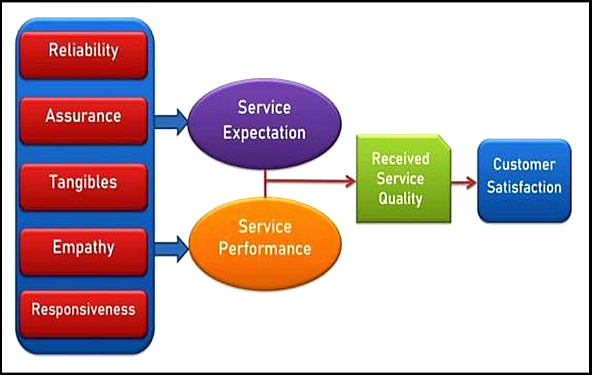
The Service Quality Model or SERVQUAL Model was developed and applied by the American marketing gurus Valarie Zeithami, A. Parshuraman and Leonard Berry in 1988. It is a method to capture and measure the service quality experienced by customers. They developed it to provide a structured way for businesses to assess and understand potential problems in service quality. The core idea of the model was built on the concept that service quality is a function of the gap between what a customer expects and what they perceive to be delivered. The model was conducted across four different service industries: Banking, Credit Cards, Repairs and Maintenance and Telecommunications.
The reliability depends on to what extent the service is accurate and honest. Responsiveness is about promptly and adequately responding to customer questions or complaints. Competence relates to the expertise an organization has, and the access determines if a customer can quickly and efficiently contact the right department.
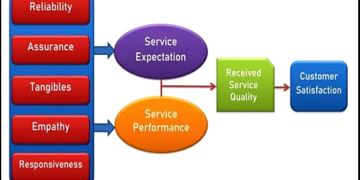
The first studies according to the SERVQUAL Model, were carried out exclusively for the services of a telecommunications, a banking and a maintenance company. The previously mentioned researched surveyed consumers and their perceptions of the experienced service quality of these three organisations. The model was later refined to the five dimensions commonly known by the acronym RATER (Reliability, Assurance, Tangibles, Empathy, and Responsiveness). The application of SERVQUAL to electronic commerce and online services (e-service quality) occurred much later, with researchers developing adapted scales like E-S-QUAL in the 2000s to address the specific characteristics of the electronic service environment. To clarify the model I am giving hereby Indigo Airlines example.
Five Dimensions of SERVQUAL Model:
Reliability
The ability to perform the promised service dependably and accurately. Indigo Airlines’ reliability is a mixed bag, with opinions divided on its punctuality and service quality. The airline’s focus on punctuality is a key operational attribute, which, while a process, provides a consistently reliable, almost “tangible”, result for customers in the form of on-time arrival. IndiGo has a reputation for a solid safety record with well-trained pilots. While recent reports suggest a decline, some travellers have experienced on-time flights. IndiGo also claims a strong record in this area. The airlines have maintained its operational efficiency. Their domestic check-in and boarding are efficient. It’s a no-frills, low-cost airline.
Assurance
The knowledge, courtesy, and competence of employees that instil trust and confidence. Indigo Airlines’ assurance includes optional add-on services like Domestic TravIensure insurance for medical emergencies and trip cancellation and Delayed and Lost Baggage Protection for compensation if checked-in bags are delayed or lost. However, “assurance” can also refer to the airline’s overall commitment, which, according to some consumer reports, has led to recent legal action due to service deficiencies and broken promises, particularly concerning flight cancellations and compensation. Assurance in aviation services is a continuous process of monitoring, evaluating, and verifying that safety and quality standards are met across all operations, including flight operations, maintenance, and ground services. It involves activities like audits, data analysis, and corrective actions to ensure that safety management systems are effective and that the organization complies with regulatory and internal requirements. The goal is to ensure consistent safety and quality to protect passengers, maintain customer trust, and drive continuous improvement.
Tangibles
The physical appearance of facilities, equipment, and personnel. Tangibles are the physical elements of a service, providing visible cues about its quality. IndiGo Airlines, like any service-based company, uses tangibility to provide physical evidence of its service quality and brand promises. This helps customers evaluate the intangible service they are purchasing (air travel). Key tangible elements of IndiGo’s service include modern and well-maintained fleet. IndiGo is known for operating a single, modern fleet type (primarily Airbus A320s and A321s, with A350s on order). The physical aircraft, their clean interiors, and consistent appearance provide a strong tangible cue of reliability and professionalism. Appearance: Staff wear neat and professional uniforms, which contributes positively to customer perception of the airline’s tangibility and service quality. Every physical touchpoint is consistently branded, from the airport counters and boarding passes to in-flight materials like seat headrests and air sickness bags. This consistency reinforces the brand image and promise. The user-friendly website, mobile app, and self-check-in kiosks are considered tangible aspects of the service, providing a seamless and efficient experience. On ground facilities include clearly identifiable check-in counters, baggage handling systems, and other airport facilities that help manage the physical process of travel.
Empathy
The degree of caring, individualized attention provided to customers. Indigo Airlines’ reputation for empathy is mixed, with recent viral stories highlighting positive customer interactions, particularly with differently abled staff members, while other passengers report negative experiences of inflexibility and lack of compassion in difficult situations. While some customers and observers have praised the airline for employee empathy, a 2024 study also found empathy to be a contributing factor to their service quality, suggesting a perception of empathy is present, even if inconsistent. A passenger shared a heartwarming experience with a hearing and speech-impaired staff member who provided an exceptionally smooth check-in and went above and beyond with extra perks, leading to praise for the airline’s “true inclusion in action”.
Responsiveness
The willingness to help customers and provide prompt service. IndiGo Airlines’ responsiveness is a mixed picture, as it is known for its strong on-time performance but receives criticism for its customer service responsiveness in areas like communication and handling complaints. While the airline emphasizes its commitment to punctuality and customer satisfaction, some studies have highlighted gaps between customer expectations and the airline’s responsiveness, particularly regarding keeping passengers informed and resolving demands promptly.
How is the model used?
Questionnaire
A survey is used to ask customers about their expectations and perceptions of a service.
Gap analysis
The difference between the perception score and the expectation score for each dimension is calculated. A negative gap indicates that the perceived service is worse than expected, while a positive gap indicates it is better. Actionable insights are studied by analysing the gaps across the five dimensions, businesses can pinpoint specific areas that need improvement, such as investing in customer service training (to improve empathy) or updating physical facilities (to improve tangibles). The gaps are based on following parameters:
Knowledge gap
A gap arises when an organisation’s knowledge of customer expectations is lacking, preventing them from approaching consumers in the right way.
Standards gap
The organisation has already formed its own idea about what the customer expects from their service. If this idea is wrong from the start and does not correspond to what customers expect, there is a significant risk that the organisation will translate it wrongly into a quality policy and corresponding rules.
Delivery gap
A gap can also occur when the organisation offers service that is different from what the consumer had expected. This also involves an incorrect implementation. For instance, in the way employees carry out policy.
Communications gap
Sometimes, the external (marketing) communication that the organisation sends out, can create the wrong expectations among customers. It also happens that the organisation communicates and promises things that are not in line with what they can deliver.
Satisfaction gap
Dissatisfaction results from a (significant) difference between the service a customer expects and the service they experience. Eventually, this will lead to the biggest gap in the experience of quality.

