

































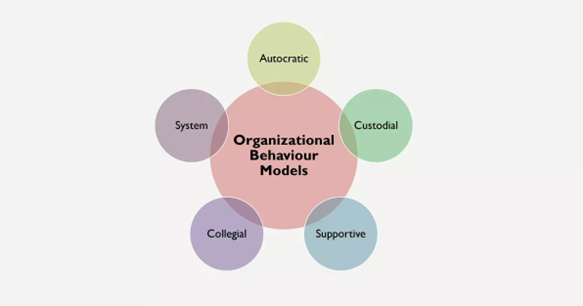
Organizational behaviour is collective behaviour of people working in the organization. It allows an organization to understand how its employees behave and interact with each other and align the vision and mission of the organization itself. Using the results, organizations can implement changes that enhance performance and efficiency, as well as improve employee satisfaction. It investigates how people interact with one another, react to changes, and contribute to the overall success of an organization. OB is a multidisciplinary field that draws insights from psychology, sociology, anthropology, economics, finance, operations, R&D and political science. The role of leadership is very important in OB.
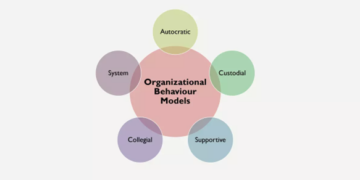
Many models of organisational behaviour have emerged during the last 100 years or so, and five of them are significant in contributing to our understanding of frameworks that organisations operate out of. These five models are the autocratic model, custodial model, supportive model, collegial model and system model.
Autocratic Model
This model focuses on power. Power is a force, a way for us to get things done. Autocratic means a leader with absolute power, a person who usually does not take into consideration the opinions or wishes of other people. In autocratic model organization leaders make decisions, and employees are expected to carry out their directives without question. Employees often feel insecure in such organizations. The flow of authority is strictly top-down, and compliance is enforced through rigid rules and supervision. The autocratic model is characterized by a centralized power structure where management holds all authority and decision-making power. Employees are expected to comply with directives without input or resistance.
This model of organizational behaviour can lead to high levels of dependency on the manager, low morale, minimal employee initiative, and potentially high turnover if employees feel undervalued. The leaders will get limited input from stakeholders. The autocratic leader makes most if not all decisions, leaving little if any room for feedback. This might boost efficiency since decisions are made quicker, but it sure doesn’t boost team morale.
As Chairman of Microsoft, Bill Gates, the driving force behind Microsoft had an autocratic style of leadership. He is a master delegator of tasks but at the same time understands the value of the skills of his team members. Because of Bill’s autocratic behaviour many good executives level employees had left Microsoft.
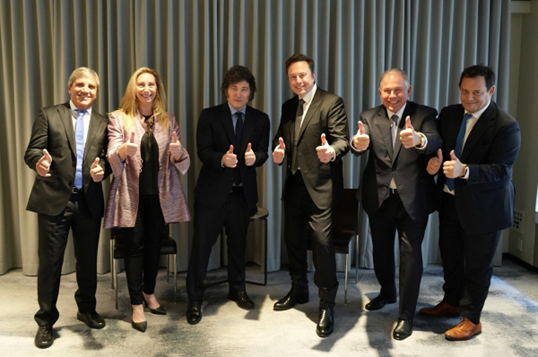
Elon Musk’s leadership style is autocratic because he is transformational by nature. He sets ambitious goals for himself and his companies that require a lot of effort and resources, but he also listens to the ideas of his team members and allows them to have a say in decisions. He is passionate about what he does and has a thorough standard for quality, which he expects from all those who work with him.
The main advantage of an autocratic leader is streamlined work that improves efficiency and productivity. They create firm deadlines and have a very clear set of expectations. This is ideal in a time of crisis or when last-minute decisions are needed. This leadership style allows for fewer misunderstandings as directions are passed down. Usually, leaders with high IQ and ambitions are autocratic because for them time is the essence.
Custodial Model
The custodial model of organisational behaviour takes into consideration the security needs of employees. A custodial environment gives a psychological reassurance of economic rewards and benefits. The basis of this model is economic resources with a managerial orientation toward money to pay wages and benefits. The custodial model focuses on providing economic security and benefits to employees by creating a sense of loyalty and dependence in the organization. It is based on the belief that if employees’ economic needs are met, they will be more satisfied and productive.
Coca-Cola provides security and benefits to employees. Employee feels reasonable contentment. And because of this, entire employee’s performance results in cooperation. As per Glassdoor.com a recruitment company report, the Coca-Cola company has an overall rating of 4.2 out of 5, based on over 10,130 reviews left anonymously by employees. 82% of employees would recommend working at the Coca-Cola company to a friend and 74% have a positive outlook for the business. This rating has been stabled over the past 12 months. About 38% of the employees at The Coca-Cola Company work eight hours or less, while 16% of them have a very long day – longer than twelve hours. Most of the Coca-Cola Company employees are satisfied with their work life balance and do not feel burnt out.
At Coca‑Cola, the employees across the globe are empowered to prioritize their development by building up capabilities and taking on new experiences. Coca—Cola provides clarity to the employees on career planning conversations that helps them take personal decisions and personal development. At Coca‑Cola, people can plan their journey in a way that works for them.
Often the employee’s direct supervisor is not the architect of the financial and bonus schemes, so the employee may feel obligated to communicate their level of performance throughout the organization, particularly upwards in the hierarchy – resulting in image becoming quite important. Employees in this structure are primarily driven by the financial security they receive for their efforts, which drives an overall on key performance goals for the firm.
Supportive Model
The supportive model of organisational behaviour seeks to create supportive work environment and motivate employees to perform well on their job. The basis of this model is leadership with a managerial orientation of support. The supportive model depends on leadership instead of power or money. The supportive model approach states that employees are self-motivated and have value and insight to contribute to the organization, beyond just their day-to-day role. It is built around the concept of leadership. I connect this model to theory Y management style that assumes employees are motivated and capable of working independently, and that they can be empowered to take on more responsibility. Theory Y managers encourage employees to participate in decision-making and collaborative projects, and they trust that employees can deliver on their objectives.
In this model, the concept of leadership is presented with a managerial point of view, where the manager leads his/her employees by setting good examples, being available and by being involved in the various work tasks. In other words, the manager strives to create a supportive working atmosphere for the workers. The skill, expertise and knowledge that employees bring to the company are critical for organizational success. For example, in hospital the doctors depend on nurses; they must be willing to listen to each other and work together to find solutions to problems. In many cases senior nurses serve as mentors for junior doctors during their formative years sharing their years of experience in patient care.
Finally, people are considered a resource in organizations because of the economic value they bring. The salaries, benefits, and bonuses paid to employees represent a significant expense for organizations. However, this expense is justified by the contributions employees make to the organization’s revenue and profitability. As such, employees are often viewed as investments that can generate returns for the organization. Employees working for TCS have positive reviews about their organization and the benefits they receive. They are content with the good work culture and organizational policies. Some of the popular and common employee benefits offered by the TCS management are paid sick leave for employees, paid holidays, educational training or certifications reimbursements, group health insurance policies, Mediclaim facilities etc. TCS adopts supportive model of organizational behavior.
Accenture too provides its employees a proper work-life balance, which includes compensation benefits and assistance for professional growth. Moreover, there are various programs offered by the organization which help the employees to maintain a good professional career and healthy lifestyle.
Collegial Model
Collegial is an adjective describing a work environment where responsibility and authority is shared equally by colleagues. You know you work in a collegial environment when your co-workers smile at you, and you don’t have to hide from your supervisor. The collegial model is a further extension of the supportive model. The word collegial means bodies of different individuals working towards a common goal. The partnership is the root level of the collegial model the approach adopted is the teamwork approach.
The workers in the collegial model are satisfied in their job roles and are committed towards the overall growth of the organisation. It is the responsibility of the manager to create a healthy and positive workplace for his employees. The collegial model works more effectively in finding new approaches such as research and development, marketing teams, technologies and software, etc.
This model is a sensible extension of the concepts proposed by a supportive model of organisational behaviour. It promotes mutual co-existence that should exist for maintaining harmony among the co-workers.
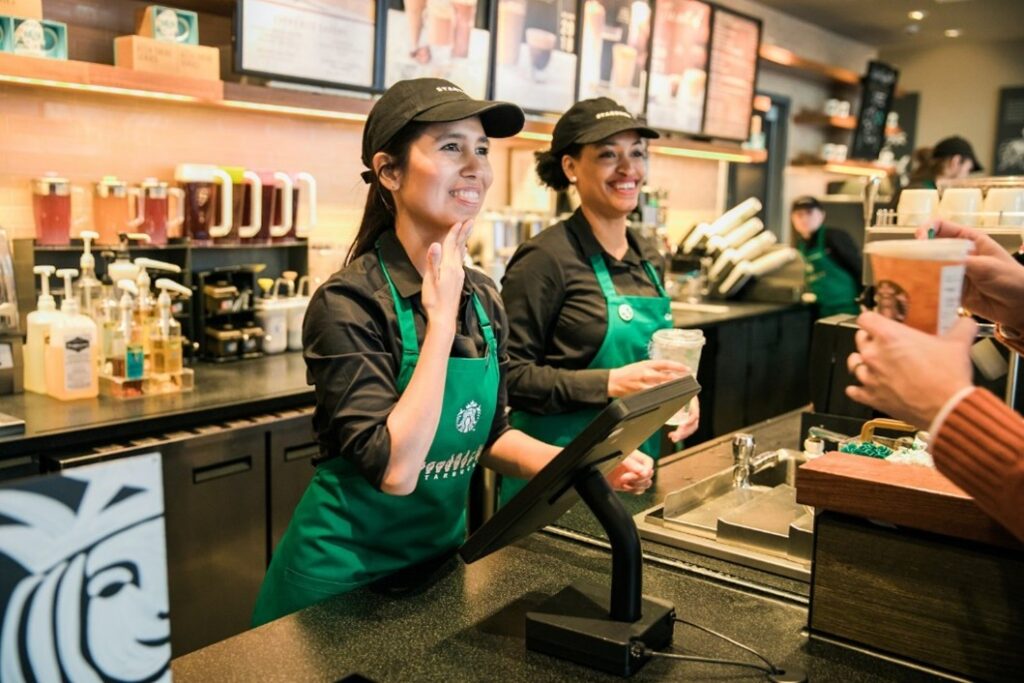
Have you ever thought how there’s a Starbucks on every block and occupying every storefront? In fact, the dominance of Starbucks was never as sure a thing as it looks in retrospect or over its company timeline. Back in the early 1990s, Starbucks chairman and CEO Howard Schultz had opened a few hundred new stores across the United States, but the business was not successful.
The ambitious expansion was hitting problems concerning customer service and a lack of communication between various levels of the company. In 1995, Howard Behar became the president of Starbucks and with him came advancements in company culture. He cultivated a work environment that met the employees’ needs, which in turn inspired them to better serve their customers. It was his belief that Starbucks was selling coffee but customer experience. This gave Behar the mission statement to rally his teams to work together more effectively. The mission statement of Starbucks is “To inspire and nurture the human spirit – one person, one cup and one neighbourhood at a time”. Mission and vision statements help making organization’s presence stronger.
System Model
The system model emphasizes the interconnectedness of various components within an organization, including human behaviour, communication, and structures. It focuses on how these elements interact to influence organizational outcomes. Collaboration among employees and management is crucial in the system model. The system model is relatively common in today’s work environment. Rather than viewing employees in isolation, the system model looks to integrate employees, and their skill set into the processes and functions of the organisation. As a result, this model is a shift away from the traditional approach where the employees were primarily motivated by financial and other benefits only.
I connect the Balanced scorecard to system model. It is a famous strategic tool which was first introduced by accounting academic Dr. Robert Kaplan and business executive and theorist Dr. David Norton. It was first published in 1992 in a Harvard Business Review article. Dr. Kaplan and Dr. Norton took previous metric performance measures and adapted them to include nonfinancial information.
The balanced scorecard (BSC) is used to strengthen good behaviours in an organization by unravelling four separate areas that need to be analysed. These four areas are also called legs; they are learning and growth of the employees, business processes, customers, and finance. The balanced scorecard is used to attain objectives, capabilities, creativities and goals that result from these four primary functions of a business. For implementing the Balanced Scorecard organizations must be able to easily identify factors hindering company performance and outline the strategic changes to be tracked in future. With the balanced scorecard, they look at the company while observing company objectives. An organization may use the balanced scorecard to implement strategy mapping to see where value is added within an organization. A company also utilizes the balanced scorecard to develop strategic initiatives and strategy objectives.
Conclusion
Business leaders should care about people management skills in their organisations because they can make or break a company. Bad people management can decrease productivity, disengage employees, and suppress innovation in an organisation. Organizational behavior models help organizations identify the factors that contribute to high performance. These models provide a framework for understanding how different components of an organization interact with each other and how they can be optimized to achieve better results.

