





































Often, we see beautiful sky splashed with wonderful hues of colors. This is due to atmospheric phenomena like light sprinkling making it blue, pink, greenish, purple at sunrise and sunset. Clouds create diverse picture like patterns; celestial events like starry nights or auroras (natural lights display in sky) providing endless variations from deep blues and fiery sunsets to dramatic cloudscapes artistic depiction of clouds, often focusing on their shapes, textures, and dramatic formations, all enhancing our world’s visual appeal. When I see wonders in the sky, I thank God for the beauty He creates.
The sunrises and sunsets times of day often produce the most dramatic and colourful skies, with colors shifting from deep purple to vibrant orange, pink, and red as light passes through more of the atmosphere. On starry nights far from city light pollution, the night sky can be filled with countless twinkling stars and constellations, offering a breath-taking view of the galaxy that is rarely seen in urban areas.
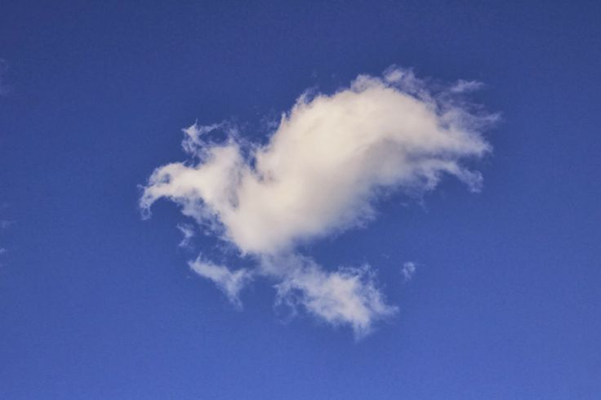
Cloud formations create the interaction of light and clouds creating diverse aesthetic effects. Fluffy cumulus clouds add texture to a bright blue sky.
Pareidolia is a psychological phenomenon where the mind notices familiar patterns, like faces or animals, in random or vague visual stimuli, such as clouds, wood grain, or even space images, fundamentally “seeing” is meaning where there isn’t any. It’s a common human tendency rooted in our brain to find patterns and meaning, often involving seeing faces in non-face objects, and it can be a helpful survival instinct but also leads to seeing celestial bodies having features.
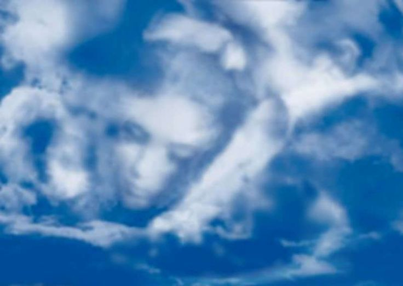
The key aspects of Pareidolia are: facial recognition because humans are hardwired to detect faces quickly, so our brains over-activate facial recognition areas for ambiguous patterns. A broader term for perceiving connections in unrelated data; pareidolia is a visual type of this feeling.
In short, seeing beautiful images in clouds is a common psychological phenomenon called pareidolia. Our brain finds familiar patterns such as faces, animals, objects in random, vague visual data like clouds, rocks, or textures; it’s a natural way our minds create meaning from shapeless forms, often leading to spiritual or personal interpretations, and it’s a source of wonder and artistic inspiration. Our brain actively tries to make sense of the cloud’s form, imposing a familiar shape onto it, like seeing a dragon, a face, or a ship.
Pareidolia is a subjective experience. What one person sees can be completely different from another’s perception, making cloud-gazing a personal and creative experience. Many people interpret cloud figures as divine signs, like angels or figures from religious texts. Clouds symbolize our feelings, with dramatic formations reflecting moods or offering a sense of peace or awe. Photographers and artists find inspiration in these fleeting natural formations, capturing their beauty and unique shapes.
“Doctor’s hand” is a nickname used by some astronomers for a cosmic object formally known as the “Hand of God”. This hand-shaped nebula is powered by the leftover, dense core of a star that exploded in a supernova explosion.
In conclusion, it is our brain being creative with cloud shapes, a delightful form of visual storytelling in the sky.