
































An organizational structure is the formal system that defines how an organization’s activities, roles, and responsibilities are organized to achieve its goals. It establishes the hierarchy, lines of command, and reporting relationships, clarifying how work is coordinated and information flows between individuals and departments. The structure of a company directly impacts how quickly decisions are made, how teams collaborate, and how work gets done. According to McKinsey, companies that have adopted more agile, purpose-driven organizational are more likely to be profitable and nearly twice as likely to outperform peers on growth metrics. Agile organization structures include Flat, Hierarchical and Network structures, which are characterized by decentralized decision-making, cross-functional teams, open communication, and a focus on adaptability.
For example, Tata Steel is a strong example of an Indian company with excellent decision-making and collaboration, known for its strong workplace culture, cross-cultural collaboration, and employee-centric practices that foster loyalty and a sense of belonging, aligning with traditional Indian values of teamwork and shared goals. It follows Hierarchical structure.
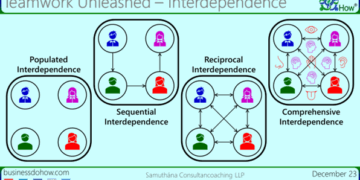
Organizational structure fosters collaboration by defining clear communication pathways, creating interdisciplinary teams, and establishing a supportive environment for shared goals and innovation. Structures like team-based and matrix organizations explicitly encourage collaboration by dissolving traditional departmental barriers and enabling diverse skill sets to work together, while a well-defined hierarchy ensures clarity in roles and responsibilities, facilitating smoother project execution.
Some of the common structures of organization
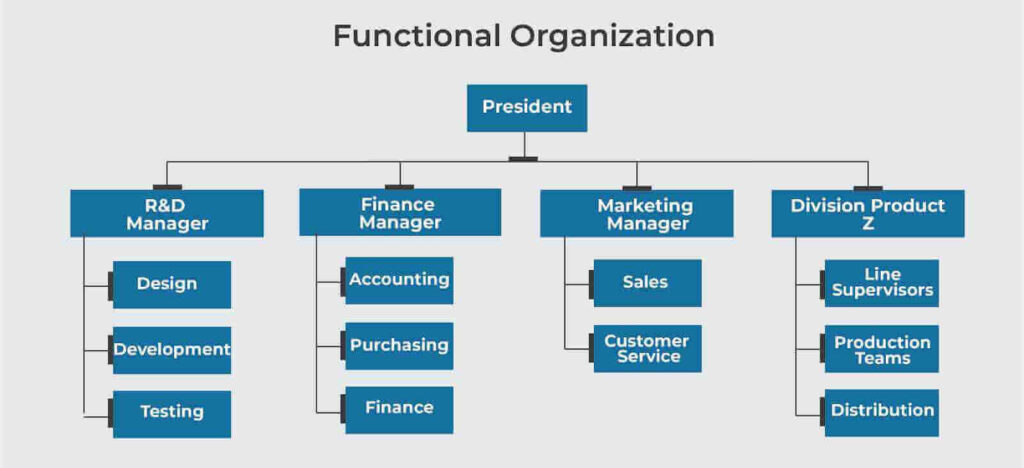
Functional Organisational Structure
A functional organisational structure starts with positions with the highest levels of responsibility at the top and goes down from there. Primarily, though, employees are organized according to their specific skills and their corresponding function in the company. Banking, Financial Services & Insurance companies (BFS)
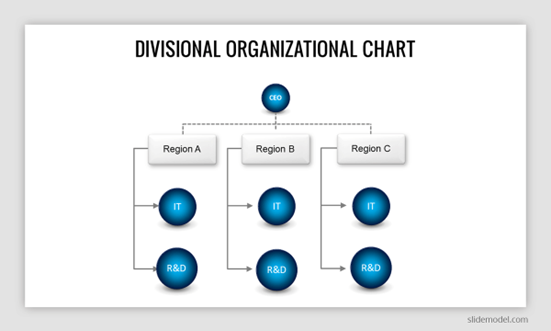
Divisional organizational structure
A company’s divisions have control over their own resources, essentially operating like their own company within the larger organization. Each division can have its own marketing team, sales team, IT team, etc. For example, Indian Railway.
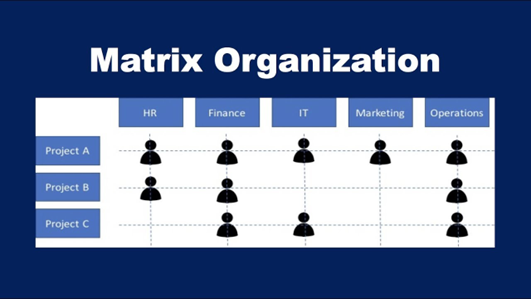
A matrix organizational structure
The chart looks like a grid, and it shows cross-functional teams that form for special projects. For example, an engineer may regularly belong to the engineering department (led by an engineering director) but work on a temporary project (led by a project manager). The matrix org chart accounts for both roles and reporting relationships. Examples are TCS, IBM.
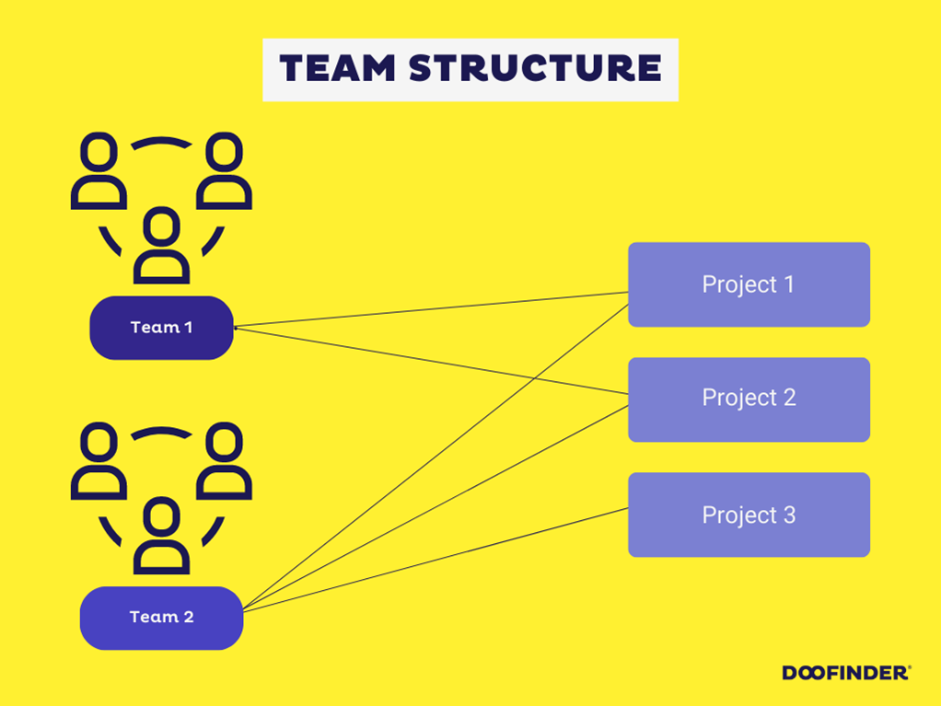
Team organizational structure
Team organizational structure is far from the traditional hierarchy, focusing more on problem-solving, cooperation, and giving employees more control. Example is Bharati Airtel. A team organizational structure arranges employees into self-managed units to achieve specific goals, focusing on cross-functional collaboration and shared responsibility rather than traditional hierarchies. This structure promotes faster problem-solving, increased employee engagement, and improved communication by giving team members the authority and freedom to make decisions
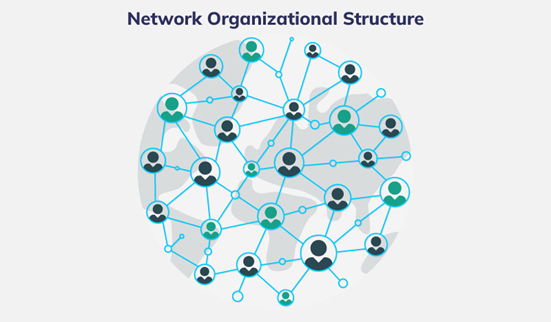
Network organisational structure
Few businesses have all their services under one roof, and juggling the multitudes of vendors, subcontractors, freelancers, offsite locations, and satellite offices can get confusing. A network organizational structure makes sense of the spread of resources. The Starbucks coffee chain is structured as a network of independently owned and operated stores, each of which licenses the Starbucks brand and sells its products.
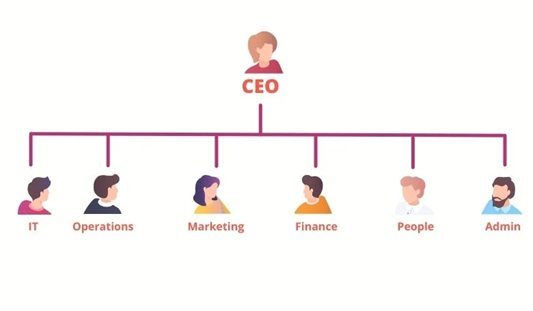
Hierarchical Shaped Organization
Hierarchical Shaped Organization is also known as Pyramid shaped organization. It’s the most common type of organizational structure in which the chain of command goes from the top (e.g., the CEO or manager) down (e.g., entry-level and lower-level employees), and each employee has a supervisor. HDFC Bank.
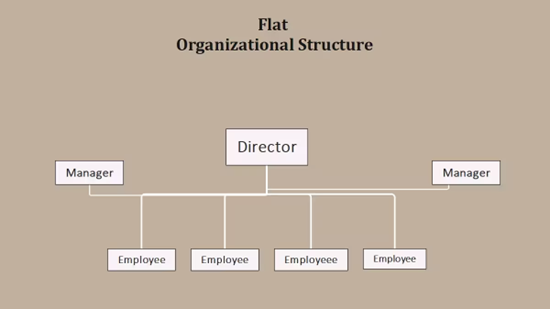
Flat organisational structure
Flat organisational structure is also called horizontal organizational structure. It fits companies with few levels between upper management and staff-level employees. Many startup businesses use a horizontal org structure before they grow large enough to build out different departments. Cipla, Dr. Reddy
Autonomy changes based on organizational structures
Autonomy levels directly change based on an organization’s structure, with decentralized, flatter hierarchies offering more freedom and centralized, hierarchical structures imposing greater control and constraints on employees. While traditional structures limit autonomy, modern approaches like self-management and decentralized decision-making foster increased employee independence, ownership, and innovation by allowing individuals and teams to decide how to achieve outcomes rather than just following directives.
To achieve autonomy, design a decentralized organizational structure that grants decision-making power and resource control to individual teams and employees. A flatter hierarchy and clear operational processes support this by clarifying roles and responsibilities, allowing for independent work and faster decision-making. Resource allocation should then be based on these clearly defined, empowered units, ensuring they have the necessary tools to operate autonomously, even at the risk of duplicate resources to foster innovation.
Cipla, Vedanta, Dr Reddy’s, Apollo Tires, and Future Group have adopted flatter structures over time to improve agility and competitiveness.
Reliance Industries’ subsidiary, Reliance Retail Ventures Limited (RRVL), acquired the retail, wholesale, logistics, and warehousing businesses of Future Group in a 2020 deal valued at ₹24,713 crore, though a subsequent legal battle with Amazon temporarily halted the process. While the legal complexities eventually resolved, Reliance effectively took over the operations, including the flagship Big Bazaar stores and other retail units.
Cross functional structures change as per organizational structure
A cross-functional structure change involves shifting from a traditional, department-based structure to one organized around autonomous, self-directed teams comprising individuals from various functional areas. This organizational transformation, often depicted in a matrix org chart, breaks down silos, fostering improved communication, enhanced creativity, better problem-solving, and increased productivity. The goal is to create a flexible, networked organization that can respond more effectively to complex, fast-changing business environments.
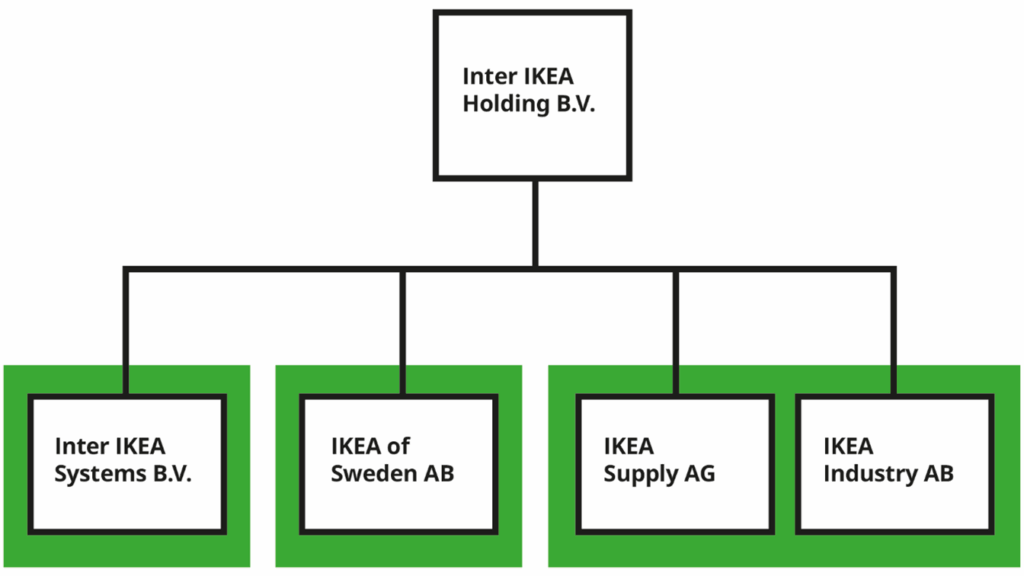
IKEA has a unique organizational structure cantered on a complex franchise system managed by Inter IKEA Group, with a hierarchical framework for strategic direction and product development. This system involves the franchisor and independent franchisees, like Ingka Group, operating under a single brand while adapting to local market conditions, creating a decentralized yet brand-unified structure. Ingka Group (Ingka Holding B.V. and its controlled entities) is the largest of 12 IKEA franchisees, representing around 90% of total IKEA sales.
At IKEA product launches require input from marketing, engineering, and sales; for sustainability initiatives at IKEA sales and marketing team up to improve customer experience. This example shows different departments with diverse skills pooling their expertise to achieve shared goals, fostering innovation and efficiency in the process.
At IKEA, cross-functional activities involve empowered, agile teams of designers, technical specialists, and market experts who collaborate from the initial project phase to ensure holistic development and rapid adaptation to customer needs and market changes. They bypass traditional hierarchical approvals, focusing on customer-centric, iterative development with integrated sustainability and digital strategies to drive innovation and efficiency across the value chain, from design to customer delivery.
For better understanding I am giving one more example. An example of cross-functional collaboration at Taj Hotels is the “Guest Experience Committee,” which brings together staff from various departments, including Front Office, Food & Beverage, Housekeeping, Sales, and Marketing to enhance overall guest satisfaction. These teams work together to develop personalized guest experiences, resolve complex guest issues, and implement new service standards, ensuring seamless and memorable stays that align with Taj’s core values.
Conclusion
A well-defined organisational structure can enhance efficiency, decision-making, and communication. Depending on the structure and type of business, decisions can be made faster, tasks can be more focused, and operational processes can be optimised. A well-designed structure allows for business growth and expansion.

