







































The universe loves music which includes trees, birds, water, air, animals and human. Many researchers including musicologists have highlighted the connection between music and nature. While trees and birds may not experience music in the same way humans and animals do, studies suggest that birds are attracted to and even learn to sing in response to human music, and music can create a calming and enhancing environment for them. Additionally, the rhythms and structures of bird song have been found to share similarities with human musical compositions, suggesting a fundamental link between music and the natural world.
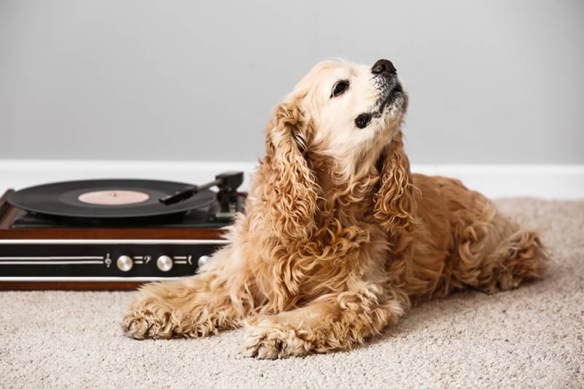
Many dogs enjoy listening to music, and some even have preferences for certain genres or instruments and certain singers. Studies have shown that music can have a calming effect on dogs, reducing stress and anxiety. My pet, a German Shepard whose name was Momo used to love Modemed Rafi’s songs “ Dil ka bhavar kare pukar”, “Abhi na jao chodakar”, “Likhe jo khat tuze”. Momo used to literally enjoy these songs, I would listen to songs with him. He was a good companion for enjoying music.
Ustad Abdul Karim Khan, a renowned Indian classical vocalist, was known for his strong bond with his dog, Tipu Miyan, who was also his musical companion. Tipu Miyan would listen to Ustad Khan’s music during his practice and even accompany him on stage, Tipu Miyan drew attention for his unique “singing” during concerts. People would throng for Ustad Khan’s concert for watching the vocalist support by Tipu Miyan. Ustad and Tipu Miyan even shared food and drink. Miyan was Ustad’s constant companion.
Ustad Abdul Karim Khan Saheb is known as the father of modern Kirana Gharana. Khan Sahib got his initial training from his uncle Ustad Abdullah Khan and father Ustad Kale Khan. Abdul Karim Khan’s Gayaki (style of singing) was a merging of pure Kirana Gharana Gayaki, Carnatic style of singing and elements of Gwalior Gayaki which he picked up from Ustad Rahimat Khan Sahib of Gwalior Gharana.
Tipu Miyan would listen attentively to Ustad Khan’s music, and Ustad Khan even gave him lessons. Tipu Miyan was known for his ability to “sing” along with Ustad Khan’s music, and he was often showcased during concerts, especially when the king of Satara was present. There’s a famous story about a concert in Satara where Tipu Miyan, by mistake, was listed as a performer. Ustad Khan, despite the mistake, had Tipu Miyan join him on stage, where he “sang” in tune with Ustad Khan’s music. When Khan Saheb learned the King of Satara would be attending, he told Tipu Miyan “इज्ज़त की बात है, you have to sing before an eminent audience,” and Tipu Miyan, in response, reportedly sang along with Khan Saheb, mirroring his notes. Khan Saheb regularly gave Tipu Miyan lessons on music. Whenever Ustad sang emotional mukhadas and ragas, Tipu Miyan would shed tears. HMV has recorded Ustad Abdul Karim Khans music.
Though HMV’s logo is not linked to Tipu Miyan and Ustad Khan, I connect to the logo with this history. In 1898, Francis Barraud painted logo for His Master’s Voice, which depicted his late dog, Nipper, listening to a phonograph. The painting and subsequent trademark rights were sold in 1899 to the Gramophone Company, using it on its sound equipment, and LPs. In 1909, created their His Master’s Voice record label. In 1909, The Gramophone Company began using the dog and gramophone trademark on its record labels, replacing the former “recording Angel” trademark. The company rapidly became known as His Master’s Voice due to the prominence of that phrase around the top perimeter of the label.
Music can affect human health and well-being. This sparked an expanding field of study that focused on how music might improve animal welfare and facilitate human-animal interaction. Birds have a vocal organ called the syrinx in their larynx that holds their vocal cords deeper into their bodies. While humans only have one set of vocal cords, songbirds have two sets, allowing them to generate two distinct sounds simultaneously and in unison. The term “bird song” refers, in non-technical terms, to the musical bird sounds that humans can hear. Loud shouts from monkeys are the most probable choice for the model of predecessor for human vocalisation due to structural and behavioural similarities in all non-human primates’ vocalisation.
Music is one of the main functions of living beings. Even plants grow faster when light music is played near them. Although making music is a distinctly human activity, research shows that animals have the capacity to listen to and even enjoy some types of music.
Conclusion
A 2002 study of shelter dogs conducted by Dr. Deborah Wells, a psychologist and animal behaviourist, found that dogs did indeed react to music. Award-winning concert pianist and canine musician Lisa Spector runs a nonprofit organization called “Music in Shelters.” She has donated CDs of playing her piano to over 1,500 shelters worldwide. The soothing classical music played at dog-specific tempos helps reduce barking and creating a more peaceful atmosphere that encourages visitors to stay longer in the shelters with the canines.

