


























The Bottom of the Pyramid (BOP) refers to the poorest two-thirds of the global population which is over 4 billion people living on less than $2 or $5 a day. Popularized by C.K. Prahalad in 2004, it represents an untapped, high-volume market. Businesses target this segment with affordable, high-volume, low-margin products (e.g., small shampoo sachets) to ease poverty while generating profit. Roughly two-thirds of the population, or about 68%, live on less than $5 per day. The global Bottom of the Pyramid (BoP) consists of approximately 4 billion people living in poverty, typically defined as those with incomes below $2.50 to $3.00 per day. This segment represents the largest, yet poorest, socio-economic group, often characterized as a major market opportunity. Roughly 4 billion people, representing the bottom two-thirds of the economic pyramid. This segment is characterized by subsistence-level income, high levels of informality in labor, and low literacy rates. It’s the lowest income tier (tier 3 and 4) of the global economic pyramid.
Market Opportunity
The collective purchasing power of the poor is immense, its voluminous creating a “fortune” for companies that can design sustainable, scalable business models, such as small-packet shampoos, low-cost banking, or affordable health services. The market size is roughly 4 billion people, primarily in Asia, Africa, and South America. The BoP is highly price-sensitive, often with irregular income streams.
While offering immense growth potential as a battleground for corporate revenue, BoP markets present challenges like poor infrastructure, which makes distribution costly.
Micro-distribution
Using local, community-based networks (e.g., selling through local women in rural areas) eg. Project Shakti of HUL. Even a kiosk (tapari) business is a high-traffic, low-overhead retail model located in busy streets, offering products or services through small, often self-service booths. It offers a cost-effective entry for entrepreneurs, with opportunities in food, retail, or tech, often allowing for flexible, mobile, or fixed setups. Key success factors include prime location, eye-catching design, and efficient inventory. Allowing consumers with daily income to purchase products they cannot afford in large, upfront quantities in sachets.
Kiosks allow utilizing technology to offer services like telecom or solar power in small, manageable increments. They act as local solutions leveraging local knowledge and resources to create sustainable local enterprise networks.
FMCG products are the top-selling category
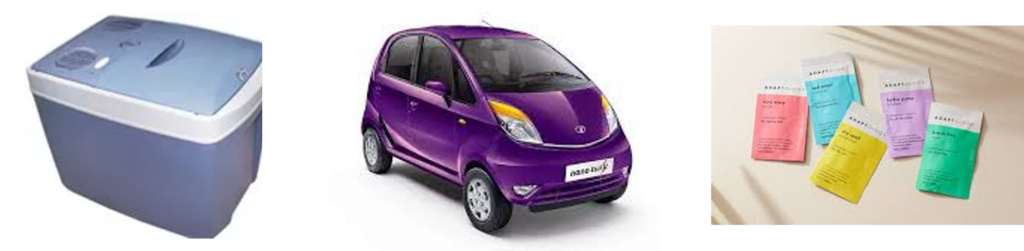
FMCG products are often sold in micro-packaging to reduce upfront costs for low-income consumers. Sachets, or single-use, small-unit packaging, are a foundation of marketing to the Bottom of the Pyramid (BoP)the largest but poorest socio-economic group. These products are designed for consumers with limited daily cash flow, allowing them to purchase branded goods in small quantities at affordable prices. Personal care products such as shampoos, soaps (e.g., Lifebuoy), toothpastes (e.g., Colgate), hair oils, and fairness creams. Detergents and cleaning soaps powder detergents (e.g., Nirma) and dishwashing soaps. And, edible items such as cooking oils, tea, spices, and sugar. To make the product accessible to BoP, Maggi introduced smaller packs at low, affordable price points, such as ₹5 (Chotu Maggi) and ₹10, allowing for impulse purchases. Companies such as Hindustan Unilever (HUL), Procter & Gamble (P&G), CavinKare, Dabur, Britannia, and Nestle use this approach to penetrate rural markets and, increasingly, to combat the rising cost of living in urban areas. Examples include small pouches for detergent (Surf Excel), shampoo sachets (Sunsilk), and small biscuits/snack packs (Good Day).
In many developing markets, small neighbourhood stores (“sari-sari” stores in the Philippines, kirana stores in India) are the primary source of goods, which perfectly suits the distribution of single-use sachets.
Functional and affordable technology
BoP consumers are eager to adopt technologies that improve their quality of life or productivity. Low-Cost mobile handsets: Budget-friendly, feature-packed mobile phones, especially from brands like Micromax, Spice, and Nokia. Solar-Powered lights and devices like D. Light provide essential, sustainable, and portable lighting and phone charging capabilities. Low-Cost household appliances low-energy products like the “ChotuKool” refrigerator. Chotukool is an innovative approach to tackling the problem of food storage in India, a country in which around one-third of all food spoils and an estimated 80 percent of households do not have access to or use a refrigerator. Chotukool is the brainchild of Gopalan Sunderraman, Executive Vice President of Godrej & Boyce Manufacturing.
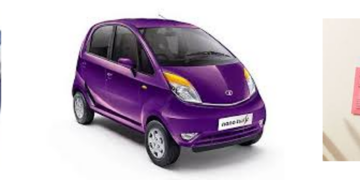
Success at the BoP often requires reinventing the business model, not just the product. The model emphasizes that innovations should be co-created with the BoP consumers, shifting from “selling to the poor” to “working with the poor”. For example, Tata Nano, Tata Ace is re-engineering automobiles for affordability. Aravind Eye Care System is High-volume, low-cost eye surgeries. The strategy has made the eye-care hospital stand out as an ethical when it provides products that improve quality of life, such as basic health, hygiene, or connectivity solutions.
Bottom of Pyramid Business Model is Huge
Consisting of over 4 billion people, this market is not small; it constitutes most of the global population. BoP consumers are highly price-sensitive, yet value-conscious. They often require specialized products (e.g., smaller packaging) and yet are value-conscious. They exist in rural and informal urban economies. The market is estimated at around trillion annually, grows faster than the global GDP. It is considered a source of innovation, offering opportunities for companies to create shared value. Most of this population is concentrated in developing nations, with significant populations in China, India, Brazil, and Indonesia. Consumption at the BoP is often described as “frugal in size but voluminous in total,” meaning products are sold in small quantities like sachets to a vast number of people, leading to high total sales revenue. The population at the bottom of the pyramid is projected to swell to more than 6 billion people over the next 40 years as global population growth remains concentrated in this segment.
Conclusion
The “fortune” at the bottom of the pyramid, popularised by C.K. Prahalad, suggests that businesses can simultaneously drive profits and lessen poverty by treating this segment as consumers rather than merely as victims of poverty.

