








































Abstract
Servant leadership style aligns closely with spiritual principles, consisting of humbleness, empathy, and the well-being of others. Leaders who incorporate spiritual practices into their management style are more likely to create a supportive and inclusive work environment. When an organization has leaders with higher spiritual quotient, aligning of individual employees’ objectives and goal with organizational vision, mission goals and objectives becomes easier. Spiritual faith is a conscious decision of an individual; it is believing in a higher energy (God) which I refer to as Universal Energy. Different religions refer this energy as per their faith; Islam calls it Allah, Christians call it Jesus & Merry, Sikhs call it Guru Granth Sahib, Hindus call it Ram/Krishna/Shakti, Jains call it Mahavir so on. When we give our trust to God, it releases the element of faith inside of us. A person may be high in their Spiritual Quotient (SQ) but may have no religious faith or belief in form of God. Similarly, a person may be religious but low in their SQ. Those seeking meaning form their life and the purpose of life are on their path to attaining that spiritual realization.
Organizational conflict refers to the condition of dispute, backbiting, grapevine, jealousy, hatred leading to disagreement that is caused by the perceived or actual opposition in the needs, interests, and values among people who work together. Organizational conflict hampers the work environment in organizations.
I am writing this paper to emphasize on Spiritual Quotient (SQ) IQ, or spiritual intelligence which helps in resolving organizational conflicts. SQ underlines IQ and EQ. Spiritual intelligence is an ability to access higher meanings, purpose of life, to achieve which one needs to abide by purposes, and unconscious aspects of the self and to be surround by these meanings, values, and purposes in living richer and more creative lives. Signs of high SQ include an ability to think out of the box, humility, and an access to energies that come from something beyond the ego, beyond concerns of I, me, myself.
I have interviewed 15 senior managers across the industries having Head Quarters in Mumbai. All organizations are blue chip companies. My interview carried a brief questionnaire carrying just five parameters: 1. Ability to see beyond 2. Resolving organizational conflicts with ease 3. Integrity 4. Organizational Culture 5. Spiritual Faith
I have listed below the outcomes
Ability to see beyond
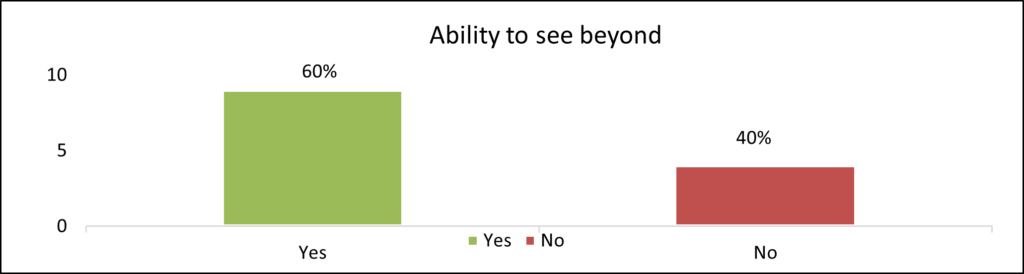
60% of the respondents said they could sense something coming in the way of business prior to Covid-19 pandemic. The COVID-19 pandemic triggered the world economy and was the largest global economic crisis in more than a century. The crisis led to a dramatic increase in inequality within the haves and have-nots across countries. The emerging economies stumbled, and economically disadvantaged groups needed much more time to recover pandemic-induced losses of income and livelihoods.
The executives of Ambuja Cements and ACC responded that both companies part of Swiss cement major Lafarge Holcim group, collectively contributed ₹3.3 crore to three NGOs to support daily-wagers, migrant labour, slum-dwellers and homeless stranded across the country on account of the lockdown. Ambuja Cement and ACC supported Goonj, an NGO on the forefront of disaster relief with expertise in material management; and Praja Foundation and Mumbai Roti Bank, who are working with labourers and daily wage workers those who had lost their livelihood on account of the country-wide lockdown to protect against the coronavirus. Together, these organisations carried out multi-pronged containment and relief efforts required immediate attention across the country.
Many people seek a sense of purpose and meaning in their work, and integrating spiritual practices and principles into management can help to increase a sense of seeing deeper purpose and meaning for both the individual manager and their team members. Fortune magazine mentions that companies like Starbucks, Google, Southwest Airlines and Staples are integrating spirituality through initiatives such as servant leadership. The magazine introduced spirituality in business as a “large, unorganized, deeply felt and deeply personal movement”. It is happening in small and large companies alike, as dog-eat-dog management models from past decades make way for lively, mutually beneficial relationships that feed the wellbeing of everyone involved in an organization. Soulful leaders recognize that relationships have the power to transform teams and business outcomes.
SQ helps resolving organizational conflicts
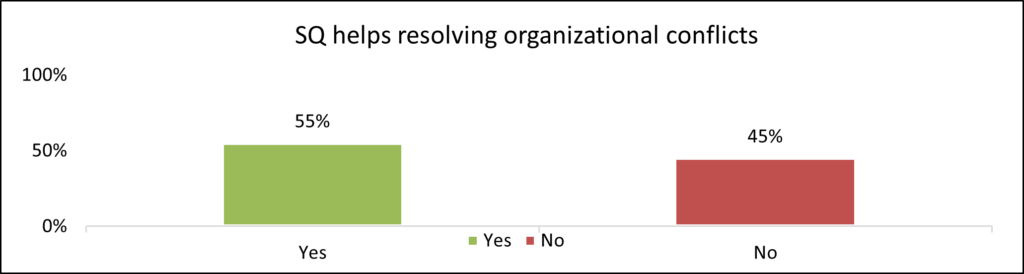
55% executives said SQ helps them solve organizational conflicts which lead to the condition of misunderstanding or disagreement that is caused by the perceived or actual opposition in the needs, interests, and values among people who work together. This leads to workplace alienation which brings down productivity. Employers must take strong steps in preventing those feelings in employees. Often when employees are transferred to another department or geographically positioned elsewhere. It’s often observed in some organizations a manager plays game of favouritism: he/she behaves partially with an employee, while others feel left out. When managers play different standards of accountability and performance for subordinates their behaviour becomes destructive and pulls down the employee morale.
The Senior Vice President at Reliance Jio said While “HR should not love people” this may sound counterintuitive given the traditional perception of Human Resources (HR) as the advocate for employees, it points to a more nuanced aspect of HR management. HR professionals are tasked with making impartial & unbiased decisions that benefit both the organization and its employees. Embracing emotional attachment or favouritism can cloud judgment and compromise the fairness of HR practices.
He says spirituality has helped him in maintaining objectivity and neutrality, He ensures that policies, procedures, and decisions are applied consistently and equitably, fostering a culture of fairness and respect in the workplace. The burden of negativity should not be taken forward. Hold on to the lessons learned, not the scars and burdens.
Integrity
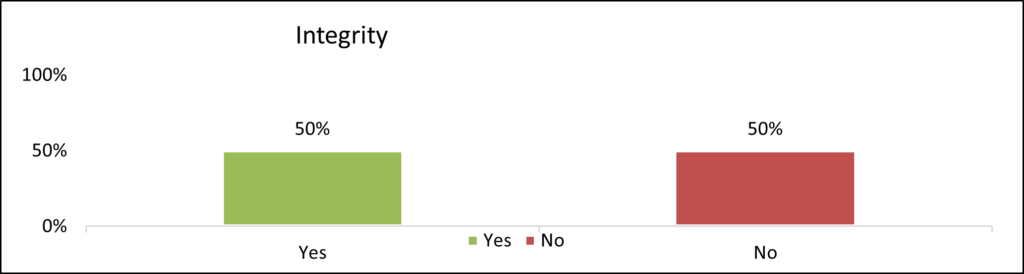
The role of a manager should be more of a go getter. He should know all the people not by their skills but also by their psychological orientation of mind. He should have a deep vision in who can execute a task to its best instead of being a typical ‘yes-man’. Individuals with integrity are incorruptible and always uncompromising in the moral and ethical values that they believe in. People with integrity always keep their word, abstaining from lies and excuses, no matter the situation. 50% of respondents said Integrity is difficult to practice among weaklings.
One of the Mid-Level managers of Wipro said he follows in the footsteps of Mr. Azim Premji. He once accompanied Mr. Premji to a Wipro retailer. When Mr. Premji shook hands with the dealer and asked – “How are you doing? Happy? Making Money?” the manager and the dealers melted with the warmth of Premji and instantly generated an emotional connect. The questions asked by Premji were genuine which reflected empathy, were straight from the heart and were powerful testimony to Premji’s belief that every Reseller must profit from his relationship with Wipro.
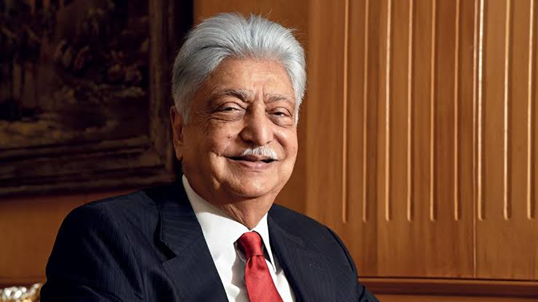
Mr. Premji genuinely feels that a good Vendor-Reseller relationship is most important for the business. The hallmark of Premji’s style is that his employees, his vendors, dealers can disagree with him privately or in the open; every Wipro Executive has the freedom to execute in his own way, innovate and above all make mistakes. Often those mistakes are costly mistakes. Wipro pays the price for that learning. One thing on which Premji does not compromise is Integrity. It is the cornerstone of Premji’s operating philosophy. He always says that everything in life can be negotiated except Integrity. Integrity is and will always be non-negotiable. He has created a values-driven business, built and scaled in a volatile market environment. Wipro has created thousands of entrepreneurs who in turn have created over 450 plus companies, raised over billion-dollar venture capital.
Today, in the corporate world also most of the organizations and institutions have realized and acknowledged that their human element, what is called ‘human resource’ is not simply intellectual property consisting of human knowledge and skills but is human spirit as well. Corporate have realized that they need to nurture and value the human spirit which is an integral part of leadership. Spirituality is not a mere element which needs reference and regular discussions on it; its practice and application will reduce commotion and misconduct to a greater extent. Lot of awareness is growing in applying spirituality in the workplace.
Organizational culture
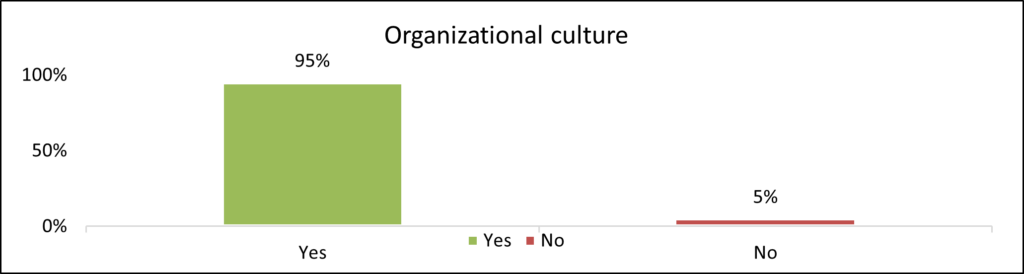
Organizational culture is a system of shared traditions, values, and beliefs, which have a great effect on how people behave in organizations. 95% of respondents said the organization culture makes or breaks an organization.
Values are lasting beliefs which have a strong influence on the people in the organization. It dictates how the organization appears in public eyes. Edgar Henry Schein, a former Professor at the MIT Sloan School of Management, is known for his work in the field of organizational development, more so in areas such as career development, talent management, group dynamics and cultural developments. Edgar Schein‘s model of organizational culture originated in the 1980s. Edgar Henry Schein identified three distinct levels in organizational cultures: Artifacts and Behaviours, Espoused Values and Assumptions which came to be known as Edgar Schein’s three levels of organizational culture. He speaks about three levels of organizational culture.
Artifacts include any tangible, evident or verbally identifiable elements in an organization. These include the architecture, beautification of workplace, careful design, layout, fitting and maintenance, built-in space for movement (space, sound, and acoustics), functionality, attractive visuals, elegance, furniture etc. Artifacts include dress codes; explicit dress codes speak a lot about workplace culture. They are varied as workplaces are. It differs as per the nature of the workplace; it is the starting point of defining and determining a dress code. Wearing I-Card and clean dress, well-groomed employees speak a lot about organizations. The employees are organization’s brand ambassadors.
Espoused values are the second layer of the organization’s stated values and rules of behaviour. It is how the members represent the organization both in terms of their behaviour and the shared values. Their interpersonal behaviours and their behaviours with outsiders speak volumes. This is expressed in mission, vision, philosophies and values of the organization. The mission, vision, goals, values need to be displayed nicely in framed posters in strategic locations in organizations. They are official philosophies and statements of identity for the public. A company’s mission statement is essentially its statement of purpose.
The third level is Assumptions which are shared basic assumptions. These are deeply embedded, taken-for-granted behaviours which are usually unconscious, but constitute the deep essence of culture. These assumptions are well integrated in the work culture, that they are easily recognized in actions of the employees and management. The inner aspects of human nature constitute the third level of organization culture. The inner values of individual employees can make or break an organization. Being honest to work, being a well-wisher of the organization, putting in the extra bit matters a lot. Sometimes when employees need to put in late hours, and they refuse, or when female employees are dominated by male employees, or when female employees are harassed by their bosses it portrays the culture. The organizations follow certain practices, which are not discussed often but understood on their own. Such behaviours form the third level of the organization culture.

Zappos.com is an online shoe and clothing shop currently based in Las Vegas, Nevada. In July 2009, the company announced it would be acquired by Amazon.com in an all-stock deal worth about $1.2 billion. Since its founding in 1999, it has become one of the world’s largest online shoe stores. Zappos has become almost as well known for its culture as it is for the shoes that it sells online. How does Zappos culture look like? It believes in delivering an experience of ‘WOW’ through service. The company believes in embracing change constantly. It believes in creating fun and weirdness among the employees. Weirdness is necessary for creating innovation. It encourages its employees to be adventurous, creative and open-minded and pursue learning. The organization believes in building honest relationship with its employees with transparent communication. In true sense Zappos behaves like a close-knit family.
When it comes to hiring employees, it starts with a cultural fit interview, which carries half the weight of hiring the candidate. New employees are offered $2,000 to quit after the first week of training if they decide the job isn’t for them. 10 core values of the company are instilled in every team member. Employee raises come from workers who pass skills tests and exhibit increased capability, not from office politics. Portions of the budget are dedicated to employee team building and culture promotion. The organization passes on great benefits and a workplace that is fun and dedicated to making customers happy all fit in with the Zappos approach to company culture, where one gets the company culture right, great customer service and a great brand will happen on its own. Zappos has established what the company culture is, and fitting into that culture is the most important thing managers look before hiring.
Why Amazon acquired Zappos? Zappos had a lot going for it. The company survived the dot-com crash, and sales were growing. The organizational culture matters.
Spiritual Faith
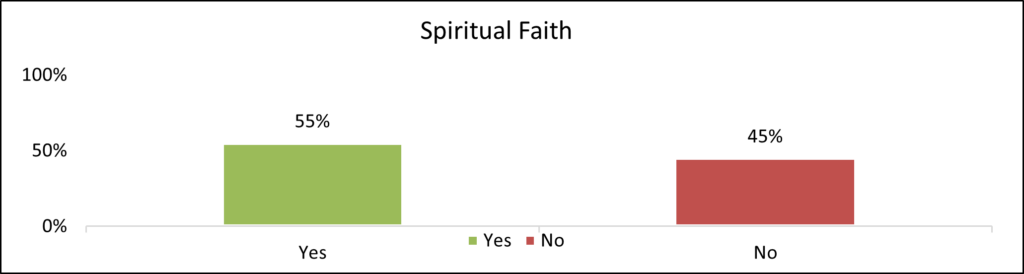
55 % respondents said they believe in spirituality and that has helped them grow personally and professionally in the organizations. A spiritual workplace is one where you find meaning, value and motivation in one’s work beyond salary and performance measurement. It is about people finding a sense of oneness and togetherness in an organization. Indira Nooyi – Former CEO of Pepsi used to keep a statue of the Hindu deity Ganesha; the God of Auspicious Beginnings typically depicted with head of an elephant with one broken tusk in her office. Nooyi, is famously candid about the difficulties women face balancing family, children, and careers, saying that women “pretend we can have it all.” The mother of two daughters cited her Hindu faith as a source of solace from the storms of guilt and stress.
Pierre Omidyar the Former-CEO of the online auction site e-Bay founded in 1995,
Pierre Omidyar, remains chairman of the company and a prominent public figure in the areas of innovation, technology, and media. He is a follower of the Dalai Lama, the exiled Tibetan Buddhist leader, Omidyar has contributed generously to support that leader’s message and travels, both with his wife Pamela and through his foundation, Omidyar Network donated funds to support a think tank, the Dalai Lama Centre for ethics and transformation values at MIT.
Donnie Smith, CEO of Tyson Foods since 2009, does just that at Cross Church, a Southern Baptist congregation in Springdale, Arkansas, the city where the company is headquartered. “He not only teaches the Bible, but he also lives the Bible,” the Rev. Ronnie Floyd, senior pastor at Cross Church and the recently named president of the Southern Baptist Convention, told Fortune. “He’s just a passionate leader in his faith as well as in the corporate setting,” Floyd said. Donnie Smith says he carries his faith with him in everything he does, including his business life. In an interview with Wall Street Journal in 2010 Smith said that hi faith influences, what he does.
Conclusion
When organizations face a short supply of vision among leaders, it loses its ground because the leaders are interested in material pursuit, authority and power. As humans we get wrong ideas about so many aspects; each of us is busy trying to prove our worth. Each one of us is trying to be better than somebody, how many of us have destroyed ourselves in the rat race. How many of us have wasted our time, efforts, energy and almost everything on this planet just trying to look a little better than somebody else. It is such a horrible waste of life, because you will never blossom into your full potential if you keep thinking how to be better than somebody. SQ helps us in fixing our priorities of life; it helps us in understanding do the best that we can–what must happen will happen.
It is worth mentioning here that according to the recent Pew Research Centre, USA, report, one in five Americans identify themselves as “spiritual but not religious.” In other words, they have some feeling regarding something greater existing in the world, but they feel allergic to religious institutions. But it is also worth recognizing that as we approach Passover and Easter, it’s important to remember that it is institutions and not abstract feelings that tie a community together and lead to meaningful change. Religion brings along with its institutional disillusionment. They act poky and dictatorial; they can both enable and shield wrongdoers. They frustrate our spiritual ideas and desires by asking us to submit to the will of others.
Abraham Maslow had suggested in his ‘Need Hierarchy’ model that as nations and their populations became more affluent, so would their spiritual hunger become stronger.
Faith can move mountains
I am a follower of Nelson Mandela. His leadership was deeply rooted in spiritual intelligence, particularly in his capacity for compassion. Despite spending 27 years of imprisonment under brutal conditions, Mandela did not emerge with a heart full of bitterness, but with a spirit of reconciliation and a vision for a united South Africa.
Shrimad Bhagavad Gita Rahasya was written in Marathi language by Indian social reformer and independence activist Bal Gangadhar Tilak while he was in prison at Mandalay, Burma. Tilak was a visionary leader who fought for liberating India from clutches of Britishers. I see him as man of intellectual capabilities, emotional strength, and spirited values.
Author: Prof. Dr. Vidya Hattangadi, Director, Babasaheb Gawde Institute of Management Studies, Mumbai.
References:
- https://www.vantagecircle.com/en/blog/workplace-spirituality/
- https://thegitahindi.com/adhyay-14/
- https://www.anandaspa.com/ru/wellness/the-bhagavad-gita–a-path-to-spiritual-enlightenment/139-41/
- https://globein.com/blog/10-influential-spiritual-leaders-around-world/
- https://drvidyahattangadi.com/why-is-spirituality-important/
- https://in.indeed.com/career-advice/career-development/what-is-integrity
- https://drvidyahattangadi.com/edgar-scheins-three-levels-organizational-culture/
- https://www.enotes.com/topics/giver/questions/what-this-capacity-see-beyond-giver-300660