

























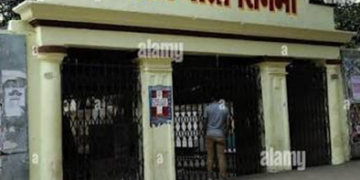





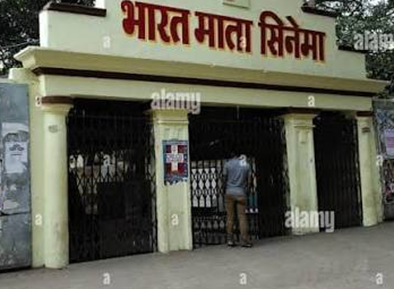
I want to talk about a brand which is an iconic single-screen theatre deeply dedicated to screening of Marathi-language films and supporting regional culture. Bharatmata Theatre in Parel/Lalbaug of Mumbai remains a vital brand and home for Marathi cinema lovers.
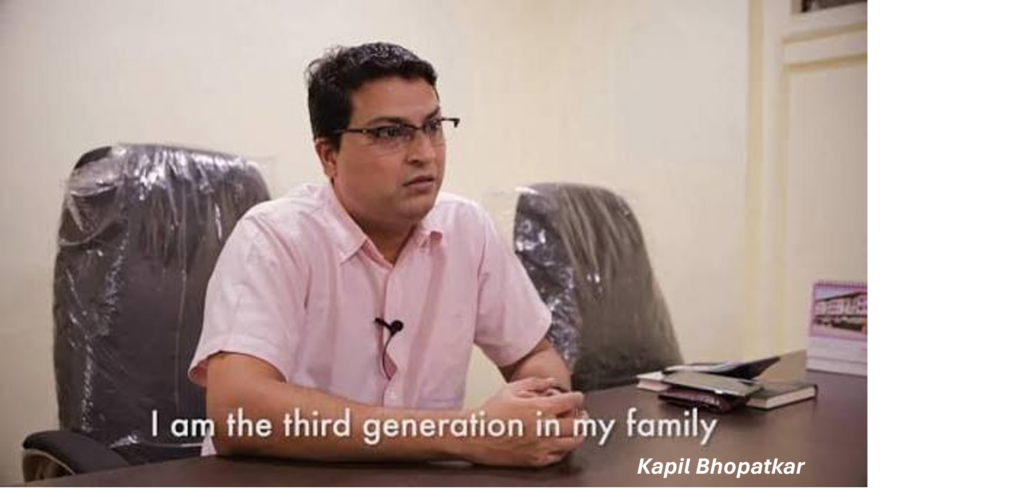
Originally opened as Lakshmi Theatre in 1937 and renamed in 1941, it has a long history deeply tied to local mill workers and regional film culture. Some brands build deep trust by putting their community first. It is one of Mumbai’s oldest surviving single-screen cinemas, Bharatmata Cinema which stands as a unique cultural institution, screening Marathi films since the late 1930s. This cinema, located in the heart of the former mill area of Lalbaug Parel, it was established to entertain mill workers, who were predominantly local Maharashtrians. The cinema hall, now managed by Kapil Bhopatkar, the third generation of Bhopatkar Family is a testament to his family’s legacy. After his grandfather Sadashiv Bhopatkar acquired and renamed it Bharatmata from Laxmi Cinema in the 1940s, reflecting the patriotic passion of the era of pre-independence of India.
During the heydays of Mumbai’s textile mills, many mill workers came to Bharatmata Cinema not only for entertainment but also because it served as a familiar community space. Workers often carried their tiffin (lunch box) and would eat their meals in or around the theatre premises before or after a show, particularly on holidays, during long breaks, or when attending matinee screenings. The theatre management was known to be accommodating of this practice, which strengthened theatre’s bond with its core audience.
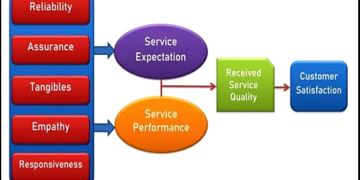
This seemingly small gesture became part of Bharatmata’s value chain and brand identity. Customer intimacy – the theatre understood the needs and habits of textile mill workers rather than imposing rigid rules. Community orientation – the theatre functioned as more than a cinema, it acted as a community centre. It became a social gathering place for the working-class community of Parel and Lalbaug. The theatre-maintained customer loyalty by making patrons feel welcome, and it earned exceptional loyalty that lasted for generations. Authentic brand positioning – Bharatmata became known as “the mill workers’ theatre,” a reputation built through lived experiences rather than advertising.
The theatre focused on efficient operations rather than luxury. It maintained affordable ticket prices, clean premises, and dependable projection and sound systems. Costs were carefully controlled, allowing the theatre to remain financially sustainable. The theatre acted as the spiritual home of Marathi cinema, premiering classics and blockbusters by legends like V. Shantaram and Dada Kondke. Namdeo Dhasal met the iconic Marathi lyricist and poet G. D. Madgulkar (popularly known as GaDiMa) at Mumbai’s Bharatmata Theatre, it proved to be a pivotal turning point that changed Dhasal’s literary trajectory forever.
Since its inception, Bharatmata has been deeply connected to the local Marathi film industry. The theatre personalised its show timings to match the shifts of mill workers of the Girangaon area, ensuring their loyal audience could attend screenings after work. Over the years, it witnessed the rise of Marathi cinema with films starring iconic actors like Jayshree Gadkar, Arun Sarnaik, Suryakant, Chandrakant, Dada Kondke, Nana Patekar and the likes. It also became a hotspot for the comic genius of stalwarts such as Ashok Saraf and Laxmikant Berde, whose films consistently drew large crowds. Bharatmata became the premier venue for Marathi film blockbusters, hosting grand premieres for legends like Dada Kondke and V. Shantaram. Though the legendary filmmaker V. Shantaram virtually owned Plaza Cinema in Dadar, Mumbai.
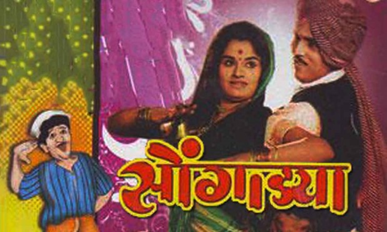
Dada Kondke’s iconic comedies starting from Songadya (1971) to Vajvu Ka (1996). Bharatmata has a special bond with the legendary Dada Kondke. All his films enjoyed long runs at the theatre, with several achieving jubilee status (completing 25 or 50 weeks). Even his two Hindi films, Aage Ki Soch (1988) and Khol De Meri Zubaan (1989), were crowd-pullers. When new Marathi films were unavailable, Bharatmata would re-screen Kondke’s films, with audiences returning to fill the seats again. For instance, in 2019, Dada Kondke’s Tumcha Aamcha Jamala (1976) and Andhala Marto Dola (1973) outperformed the new releases of that week, which is a testimony to his lasting appeal. Bharatmata’s association with Kondke was unbreakable bond.
In the mid-90s, the Marathi film industry went through a rough patch, leading to a challenging phase for Bharatmata. Most Marathi films of that period had regional themes aimed at rural audiences, making it difficult for urban viewers to connect. However, a few exceptions like Chalu Navra Bholi Baiko (2002) and Pachadlela (2004) did well at the box office. Despite keeping ticket prices low, with stall seats priced at just Rs. 50 and balcony seats at Rs. 60, the theatre struggled to survive.
In 2010, Bharatmata Cinema faced another hurdle when the National Textile Corporation (NTC), which owns the land, issued an eviction notice due to the lease expiring. This news rallied the Marathi film industry and political parties, who supported the theatre’s fight to continue operations. Though the case is still in court, Bharatmata continues to function, much to the relief of its loyal patrons.
It faced the threat of closure until Shwaas (2004) came to its rescue. The 2004 Marathi film Shwaas helped revive Bharatmata Cinema in Mumbai by pulling the iconic single-screen theatre out of a major financial slump during a difficult low patch for regional cinema. During the mid-1990s and early 2000s, Bharatmata Cinema faced a severe financial lull following the decline of the surrounding textile mills. The massive critical and commercial success of Shwaas in 2004 brought large audiences back to the historic venue, revitalizing its operational state.
Shwaas was India’s official entry to the Oscars that year which marked a turning point for the Marathi film industry, reviving its fortunes with high-quality, content-driven films. Bharatmata once again thrived, screening hits like Nishikant Kamat’s Dombivali Fast (2005) and Mahesh Manjrekar’s Mee Shivaji Raje Bhosale Boltoy (2009). Audiences returned in hordes, filling the theatre as before, proving that good content could still pull crowds, even with the affordable ticket prices that Bharatmata maintained compared to nearby multiplexes charging Rs. 200 or more.
For adapting to modern technological advancements, Bharatmata upgraded to digital projection in 2012, enhancing both picture and sound quality. The theatre continued to attract moviegoers, especially for Marathi films. Remarkably, Kaul (2016) completed 100 days at Bharatmata, a feat in an era when even Hindi films typically run for only two to three weeks.
When the Marathi blockbuster Sairat was released in 2016, the song “Zingaat” became a cultural phenomenon. Recognising the audience’s enthusiasm, Bharatmata Cinema installed a small podium near the screen where viewers could dance during the “Zingaat” sequence without obstructing others’ view.
The Bhopatkar family’s initiatives demonstrates several strategic management lessons: 1. customer experience innovation: Instead of discouraging audience participation, the theatre embraced it and designed the space accordingly. 2. Value chain enhancement – the physical infrastructure (operations) was modified to improve the entertainment experience, adding value without changing the core product—the film. While multiplexes emphasised comfort and silence, Bharatmata differentiated itself by celebrating the participatory culture of Marathi cinema audiences. 3. The podium transformed movie-watching into a shared celebration, reinforcing the theatre’s emotional bond with its patrons. The initiative was consistent with Bharatmata’s long-standing identity as a people’s theatre that understood and respected its audience’s traditions.
This is an excellent illustration that value chains are dynamic rather than static. Bharatmata did not merely exhibit films; it continuously adapted its operations to create memorable customer experiences. The earlier practice of welcoming mill workers with their tiffin boxes and the later decision to provide a dancing podium for “Zingaat” both reflect the same philosophy: understanding customers deeply and modifying operations to enhance value. These seemingly small operational decisions contributed significantly to the theatre’s enduring brand equity.
During the shutdown of COVID-19 pandemic in 2020 and the theatre remained closed for several years for much-needed restoration. It reopened on March 24, 2026, after a major upgrade by third-generation owner Kapil Bhopatkar in partnership with One Cinemas and Mukta A2 Cinemas. It retained its classic heritage exterior while updating the inside with plush new seating, air-conditioning, Dolby audio, and modern laser projection.
Kapil Bhopatkar is a story writer, dialogue, and screenplay. He is known for his story writing for web series /movies such as Asambhav and Andharmaya both released in 2025.
Despite the many challenges it has faced over the decades, Bharatmata Cinema remains a cherished institution, reflecting the resilience and pride of Marathi cinema. It continues to fulfil its original purpose of providing quality entertainment at affordable prices, staying true to its roots while adapting to the changing times. Bharatmata truly remains an enduring symbol of the city’s cultural heritage. Bharatmata kept the price affordably low for a decade. Service and Support allows customer retention.
Today, Bharatmata theatre is 89 years old, having originally opened in 1937. It demonstrates an important principle in strategic management; a strong brand is created when every activity in the value chain consistently reinforces the same value proposition. Its competitive advantage did not come from offering the widest choice or the most luxurious experience. It came from specialising in Marathi cinema and aligning procurement, operations, marketing, and customer service with that single strategic focus. This consistency-built trust, customer loyalty, and a distinctive brand identity that has endured for decades.
As a proud Marathi film viewer, I am deeply grateful to Bharatmata and Bhopatkars for I have fond memories of watching some of the BEST Marathi movies there. Some brands operate on a low-key profile just to maintain their bond with customer loyalty. This is the best example I could give in the branding lessons.

