







































I am very fond of architecture. I travel far and wide in India to see architectural marvels. India is a rich country with diverse heritage encompassing ancient civilizations, vibrant cultures, diverse religions, and numerous UNESCO World Heritage sites, making it a bounty of heritage treasure of history and art. Architecture talks about our culture, how we live, work, and interact, while also reflecting cultural identity and fostering a sense of place and belonging.
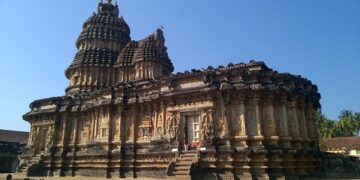
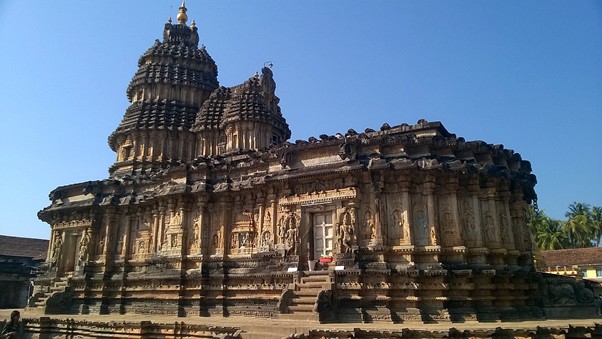
One such beautiful temple is Sri. Vidyashankar temple of Lord Shiva and Parvati. The temple is famous for its exceptional architecture that combines the Hoysala and Dravidian styles of architecture. The temple has 12 pillars in total, each of which represents the twelve zodiac signs separately: Aries, Taurus, Gemini, Cancer, Leo, Virgo, Libra, Scorpio, Sagittarius, Capricorn, Aquarius, and Pisces. Vidyasankara Temple is a prominent pilgrimage site for followers of Advaita Vedanta. The temple was founded in the 13th century by Vidyaranya, a sage and patron saint. Advait Vedanta is not dual – our soul and God is one, God is within.
The Vidyashankara Temple was built in the year 1338 A.D. It was built under the patronage of the Vijayanagara Empire, dedicated to Guru Vidyashankara, a prominent figure in the lineage of the Sharada Peetham.
It is a unique monument built entirely of stone combining both Hoysala (Chalukya) and Dravidian architectural styles. The structure stands on a high plinth and commands a magnificent view from the hills and their slopes all round. It is a rectangle with apsidal (referring to shape of an apse) east-west ends. On the western side is the Garbhagriha (Sanctum Sanctorum), with Vidya Ganapati on one side and Durga on the other side of the entrance. On the other three sides of the Garbhagriha are shrines to Brahma, Vishnu and Maheshwara with their wives. In the eastern half of the structure is a mandapa (pavilion) with twelve pillars, huge monoliths carrying large figures and carrying heavy projecting trusses on top. These twelve pillars are marked by the twelve signs of the zodiac in their regular order. The central ceiling is an exquisite piece of workmanship with lotus and pecking parrots. It is in true sense a wonder of craftmanship.
Let’s understand this: the temple builders of that time had the genius idea of positioning these pillars in such a way that the sunlight falls on the corresponding zodiac sign pillar every month, casting a shadow on the corresponding sign following the lunar calendar.
Each Zodiac Pillar is decorated with intricate carvings that reflect the characteristics and symbols associated with its respective zodiac sign. You can check yours when you visit the temple complex. There you will find detailed depictions of animals, celestial figures, and several gods and goddesses. The general belief is that this genius design was incorporated to help the temple priest calculate and keep track of all important dates, events and festivals.
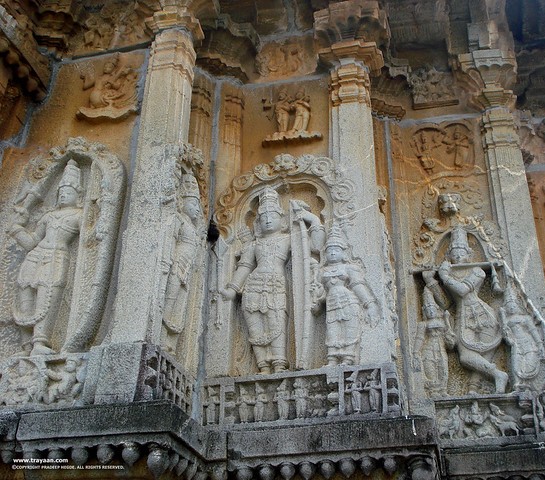
These pillars continue to be a source of wonder and inspiration for visitors to the temple. They portray India’s rich cultural and scientific heritage. India is a rich country. India’s status as “Vishwaguru” is its ability to enlighten the world with profound knowledge; Yoga, Ayurveda, Mathematics, and Philosophy which continues to influence global thought
Vidyaranya, also known as Mādhavācārya, was the 12th Jagadguru of the Sringeri Sharada Peetham from 1380 to 1386 AD, and he was the elder brother of Bharati Tirtha, the 11th Jagadguru. He played a significant role in establishing the Vijayanagara Empire and is considered a saint and statesman. Vidyaranya later became the 12th acharya of the Sringeri peetham in 1375 CE. Shortly after the start of the Vijayanagara empire in 1336 CE, the rulers began building the Vidyashankara temple at the Sringeri peetham site. This temple was completed in 1338.
To the student of Hindu iconography which consists of several symbols of animals, flora, instruments, weapons, or even color, and devas, this temple is a authentic store house of sculpture. The meditation of the Linga (Vidya Shankara Linga) in the sanctum and other Murtis will lead to Divine consciousness.
Vidyatirtha Rathotsava is celebrated on a grand scale during kartika Shukla paksha (October, November). The festival spans for seven days from Tritiya to Navami. On the Saptami day His Holiness performs special Puja. Also, the Aradhana of Sri Vidya Shankara is performed on shasti, saptami and ashtami. This temple is under the care of the Archaeological Survey of India. One must visit Vidyashankara temple for its unique blend of architectural styles, spiritual substance, and serene surroundings, offering a rich experience for both devotees and those seeking to explore Indian culture and history.