






































Asset ownership is the legal right of an individual or entity to possess, control, and derive economic value from it which can be tangible (like land or equipment) or intangible (like patents or goodwill). This ownership grants the right to exclude others from using the asset and to transfer it or convert it into cash, representing a crucial aspect of financial well-being and business growth.
An ownership test determines if an entity satisfies certain ownership requirements, most commonly for tax purposes (to claim losses), to verify a website’s legality, or to identify beneficial owners for compliance like anti-money laundering rules. The specific criteria vary greatly depending on the context, such as the percentage of equity an individual holds or the continuity of shareholdings over time.
An example of the ownership test in India comes from the Prevention of Money Laundering Act (PMLA), which defines beneficial ownership for various entities, such as requiring natural persons controlling over 25% of a company’s shares or exercising control through other means to be identified.
The RBI applies ownership tests when approving significant investments in private sector banks. Shareholdings up to 10% are assessed by considering the stability of funds, the applicant’s experience in acquisitions, and how the applicant’s corporate structure aligns with effective bank supervision. For investments exceeding 30%, further criteria are considered, such as the public interest, the desirability of diverse ownership, the applicant’s plans for the bank’s development, and the impact of shareholder agreements.
Mentioned below are some key aspects of asset ownership:
Control and Possession
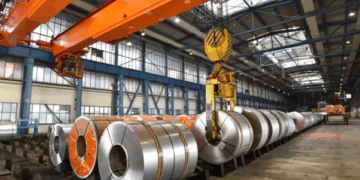
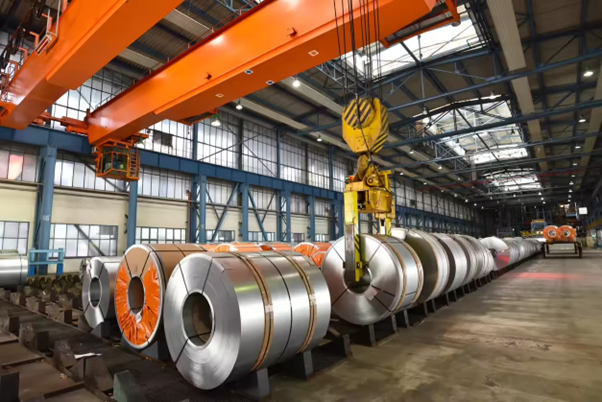
The owner has the authority to manage, use, and control the asset. An example of Jindal Steel’s control and possession of an asset is its ownership and operation of a modern steel plant, such as the one in Chhattisgarh, where it manufactures a range of products including rails, beams, plates, and coils, using these facilities and processes to generate revenue from steel production. This includes the management of its raw materials, manufacturing processes, and the finished goods it sells, which is an example of control and possession. Jindal Steel decides which new steel-making technology to acquire, how to expand existing plants, and what products to focus on, like the INR 16,000 crore capex plan to expand value-added products.
Capex (Capital Expenditure) is money a company spends on long-term physical assets, such as buildings, machinery, and equipment, to acquire, upgrade, or extend their life. Unlike operating expenses, CapEx is an investment that provides benefits beyond a single fiscal year and is listed as a fixed asset on a company’s balance sheet, with its cost spread out over the asset’s useful life through a process called capitalization.
Economic Value
Assets generate economic value, either through their use in production, for financial obligations, or by being sold for cash. Jindal Steel’s economic asset value grows through strategic capacity expansion like the Angul plant’s expansion and new facilities, cost management via projects like the slurry pipeline, and a focus on high-margin value-added steel products, which also attracts policy support. This strategy results in increased revenue, profitability, and growing shareholder value, as evidenced by a rising Book Value per Share. The commissioning of new, technologically advanced facilities, like a galvanizing line and slab caster at Angul, strengthens the company’s production capabilities and future product mix.
Transferability
Ownership implies the right to transfer the asset to another party or to convert it into cash. An example of asset transferability at Jindal Steel (JSPL) is the transfer of advanced material technologies from DRDO (Defence Research and Development Organisation) to produce specialized steel, like DMR-1700 sheets and plates, for defence applications. This technology transfer allows JSPL to expand its product portfolio by applying the acquired technology to its existing assets and manufacturing processes, thereby creating new revenue streams and strengthening its position in the defence supply chain.
Legal Right
Ownership is a legal concept based on a bundle of rights, often referred to as title, which establishes the owner’s claim over the asset. The legal rights to assets at Jindal Steel depend on the context; as a seller, they retain title to goods until full payment. As a company, Jindal Steel’s assets are protected by internal controls, transparent governance, and compliance with laws, including those governing the ownership and transfer of assets and adherence to the Companies Act for safeguarding and maintaining proper accounting records. For shareholders, rights to shares are governed by the Articles of Association, which dictate how shares are transferred and how survivors or legal heirs can claim them.
We will discuss merger and acquisition ownership test here below:
Merger Ownership Test
A merger ownership test isn’t a single standard; it can refer to assessing whether acquiring ownership of a target company is the best way to create value, or it can mean evaluating a company’s existing ownership structure for factors like the concentration of voting rights or foreign control, which are crucial during due diligence. It can also pertain to the shareholder approval process, where majority shareholders must consent to the merger for it to proceed. Jindal Steel does not have a universal “merger ownership test”; rather, the ownership structure after a merger or acquisition is determined by the specific transaction, which involves a cash consideration or share swap resulting in a specific shareholding pattern for the acquiring company and the new combined entity. For instance, in the recent Jindal Steel & Power (JSPL) acquisition of Allied Strips, Jindal Steel Odisha (JSO), a subsidiary of JSPL, purchased Allied Strips, making it a subsidiary.
An acquisition ownership Test
This determines if a buyer’s control over an acquired company is significant enough to warrant treating the transaction as a business combination, Jindal Steel & Power Limited (JSPL) recently completed its acquisition of Allied Strips Limited (ASL) for a cash consideration of ₹217.53 crore via its subsidiary Jindal Steel Odisha (JSO), making ASL a wholly-owned subsidiary. The purpose of this acquisition is to expand JSPL’s product portfolio and create synergies with its existing steel manufacturing business by using its own steel production as raw material for ASL. often involving more than 50% of the stock. Tests like the Investment Test, Asset Test, and Income Test are used for significant step acquisitions to check the proportionate interest in the acquiree’s assets and earnings.
Backward Integration
Backward integration is a vertical integration strategy where a company expands its role by acquiring or developing the suppliers of its inputs, such as raw materials or components. This strategic move gives the company greater control over its supply chain, allowing it to reduce costs, improve efficiency, ensure the quality and availability of its materials, and gain a competitive advantage. A backward integration is a takeover or acquisition of a company or assets in the upstream portion of the supply chain, such as acquiring a raw material supplier or a component manufacturer. For long-term access to essential materials like iron ore and coal is guaranteed. Jindal Steel and Power Limited (JSPL) employ backward integration by controlling its raw material supply through captive iron ore and coal mines and having its own power generation capacity. This strategy provides the company with a consistent, secure, and cost-effective supply of key materials, ensuring quality and price control while reducing dependence on external suppliers and improving overall efficiency in its steel manufacturing processes.
Forward integration
It is a business strategy where a company moves into later stages of the supply chain by acquiring or merging with businesses that were previously its customers, such as distributors or retailers, to gain more control over its product’s distribution, sales, and delivery to end-users. Forward integration involves a company expanding into activities closer to the end customer, moving downstream in the supply chain, such as taking over a distributer, taking over retailer etc. Jindal Steel’s forward integration strategy focuses on moving downstream from its core steelmaking operations to produce more value-added products, such as flat steel products, rails, and beams, rather than just raw steel. This involves constructing mills like the Angul Hot Strip Mill to enhance flat steel capacity, diversifying their product portfolio to cater to diverse market needs, and ensuring cost-effectiveness and control over their entire value chain.

