




























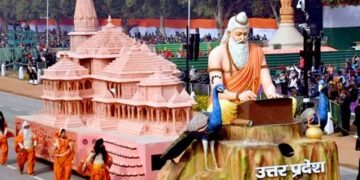









The nine avatars of Durga (Navadurga) are interpreted as representing various phases or stages of a woman’s life, encompassing different aspects of her journey and strength.
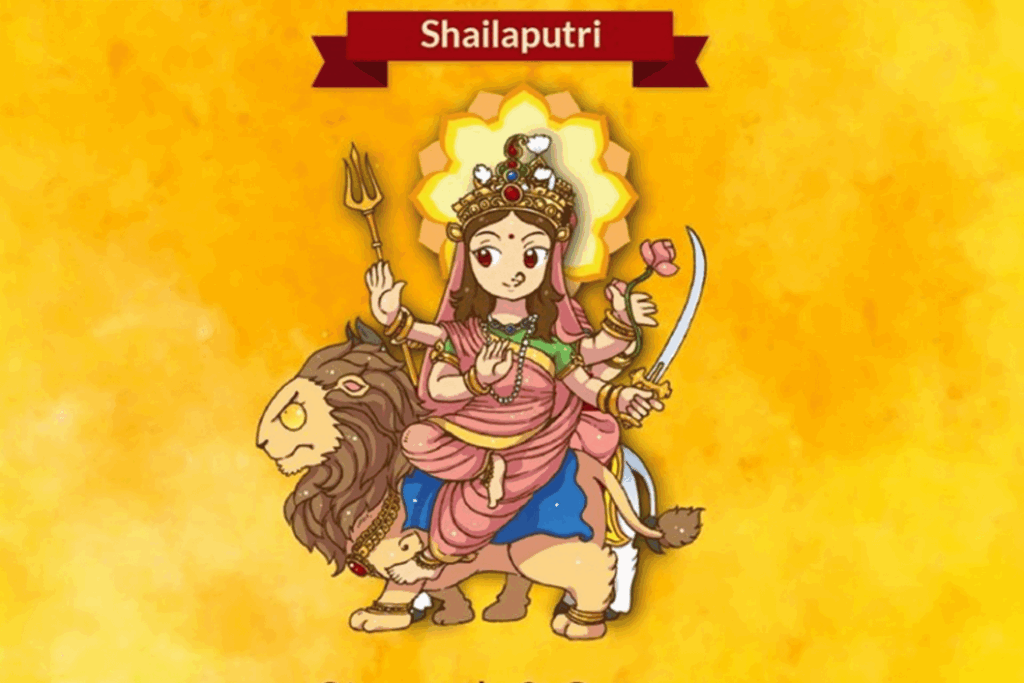
Shailputri
After her self-sacrifice, immolation, Goddess Parvati took birth as Lord Himalaya’s daughter. In this form, she is called Shailputri. A girl’s journey begins with role of a daughter. In Sanskrit, Shail means mountain. Hence, Shailputri means the daughter of the mountain. Shailputri represents the early and innocent stage of life of a girl. She loved spending time in the beautiful hills and valleys surrounding her home. She is often depicted riding a bull (Nandi) and adorned with a crescent moon on her forehead. Shailputri holds a trident in her right hand and a lotus flower damru (power drum) in her left, which showcases her powerful yet nurturing nature. Shailpautri rules our Muladhar Chakra. The Muladhara chakra, also known as the root chakra which , is the foundation of the energy body, situated at the base of the spine and associated with grounding, stability, and a sense of security. Goddess Shailputri is worshipped on the first day of Navratri.
Brahmacharini
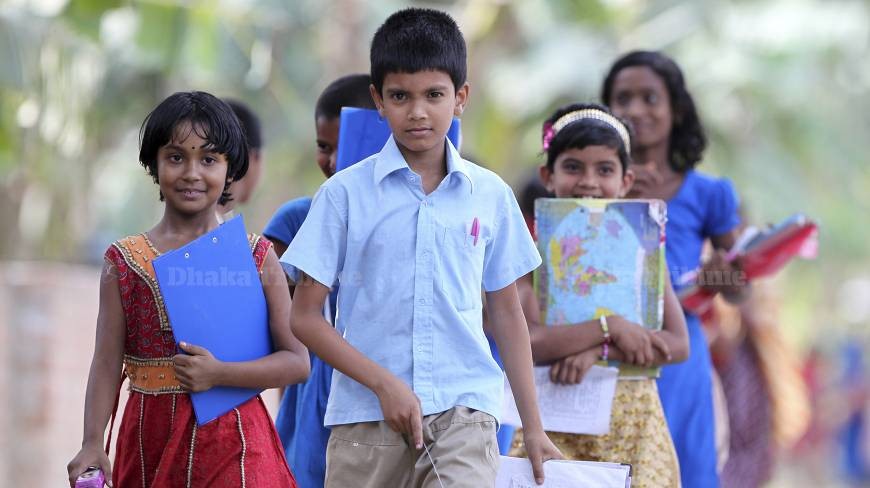
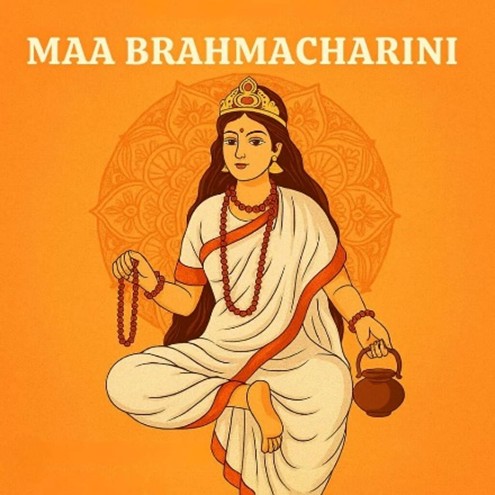
Shailaputri grows and becomes Brahmacharini to learn, to study different arts, science. She is the second form of Goddess Durga who is worshipped on the second day of Navratri. She symbolizes devotion, penance, and inner strength, with devotees seeking blessings for spiritual growth and purity. “Brahma” signifies penance or tapasya, and “Charini” means one who practices or performs. At this stage of life, a girl is a learner of arts, culture, science etc. She gains distinct knowledge. She is a student. Brahmacharini is associated with the Swadhisthana chakra, also known as the sacral chakra, which is linked to creativity, emotional well-being, and the ability to be in touch with oneself. She is symbolised as a serene figure, often walking barefoot, carrying a rosary (japamala) and a water pot (kamandalu), representing her simple life and intense meditation. Worshipping her is believed to gain strength, patience, and spiritual growth in devotees. She embodies peace, sacrifice, and resilience. She is adorned with white colour which is the auspicious colour for Maa Brahmacharini, representing her intense penance and sacrifice.
Chandraghanta
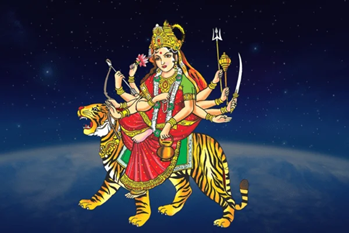
Brahmacharini marries Shiva and becomes Chndraghanta. This fearsome form of Parvati, with the knife in one hand and Ghanta in the other; Moon on the forehead and sitting on a wolf is named Chandraghanta by Brahmadev. Here she is married Shiva. She carries the crescent moon of her husband. She embodies peace, bravery, and serenity, and is believed to grant devotees strength to overcome obstacles and fear, guiding them towards harmony and spiritual growth. Chandraghanta is associated with the Manipura Chakra (Solar Plexus Chakra), which is located at the navel and is associated with personal power, determination, and self-esteem. This chakra is considered the energy powerhouse of the body, located in the solar plexus area. Chandgraghanta cares about her husband’s wellbeing, and she cares for his self-esteem too. She is caring and loving towards her husband, and she supports his endeavours. She is his best friend and supporter. During the battle between her and the demons, the thunderous sound produced by her bell paralyzed and stunned the demons. She is ever ready to fight which shows her eagerness to destroy the foes of her devotees. She appreciates her husband Shiva’s devotees.
Kushmanda
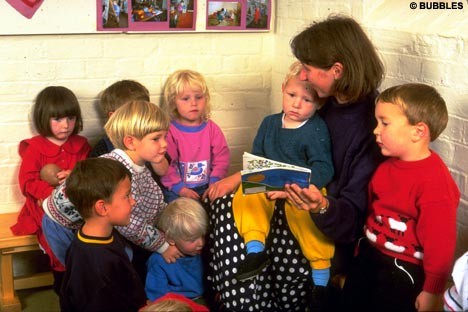
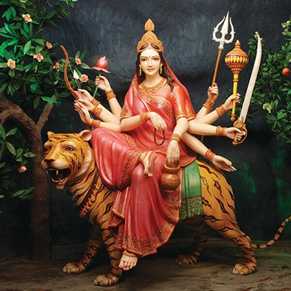
Chandraghanta is now ready to become a mother. She is portrayed carrying “little warm cosmic egg,” signifying her role as the mother, creator of the universe with a divine smile. “Kushmanda” is a compound word made up of “Ku” (meaning little), “Ushma” (meaning warmth), and “Anda” (meaning cosmic egg). She is considered the creator of the universe, believed to have brought the universe into existence with her divine smile. A lady becomes a mother when she gives birth to a child or adopts a child. This marks a significant transition in her life, involving physical, emotional, and psychological changes. A woman is a grown from of a female child, while a mother is a woman with child/children, or any women that exhibits motherly attributes. All Female Child Are Mothers! A woman is a woman until she becomes a mother. Kumari Puja, also known as Kanya Puja, which is performed to honour young girls as pictures of Goddess Durga, signifying the divine feminine energy and seeking her blessings for health and prosperity. Maa Kushmanda stays in the Anahata Chakra (or heart chakra), which is also known as the green-hued chakra which is considered the centre of love, compassion, and emotional balance.
Katyayini
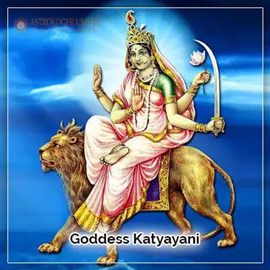
Maa Kushmanda becomes Katyayini. A woman goes through many up and downs in her life because life is complex. But a woman also has lots of inner strength. Katyayini is known as the destroyer of evil, praying to Maa Katyayani is said to cleanse the sins of the devotees, she drives out evil spirits and removes obstacles from our life. The sixth avatar, who is also known as Mahalakshmi was guided to kill the demon Mahishasura. For doing this job, Katyayeni, had been given powers by all gods. It is said that Brahma, Vishnu, Shiva and other gods produced and emitted out energy from their eyes, and this energy formed “Devi Katyayeni”. She is the one who killed “Mahishasur” and thus she is also called as “Mahishasurmardini”. She is considered as the deity of the “Ajna Chakra”, which is called “Third Eye Chakra” in English. Yogis and sadhakas concentrate on this chakra to for getting empowered internally. The third eye chakra helps us make sense of the world by connecting the dots between what we see externally and what we understand internally. It is our inner teacher, the source of intuition that leads us toward clarity and meaning in our everyday experiences.
Kaalratri
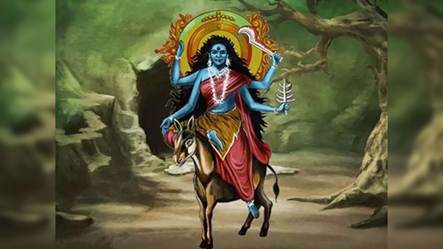
Katyayini becomes Kaalratri known for her fierce appearance and power to destroy darkness and ignorance, while also granting blessings and protection on her devotees. The appearance of Kalaratri can be seen as bearing catastrophe for evil doers. But she always bears good fruits for her devotees who avoid fear and worship her. She removes the darkness of worry from life of such devotees. She is the goddess who removes darkness and ushers in light. Her name is derived from two words: ‘Kala’, meaning time or death, and ‘Ratri’, meaning night. Maa Kalratri is often depicted with a dark complexion, fiery eyes, and dishevelled hair. Kaal Ratri, a fierce manifestation of Durga which is associated with both the Muladhara (root) chakra and the Sahasrara (crown) chakra. She is believed to reside in the Muladhara chakra, which represents the base of the spine and is associated with stability and grounding. Additionally, she is linked to the Sahasrara chakra, the crown chakra, which is located at the top of the head and is associated with higher consciousness, spiritual awakening, and the dissolution of time. Fierce women are those who are not afraid to speak their minds, they accept challenge to fight against injustice, and advocate for their rights and the rights of others. They demonstrate resilience and strength in the face of challenges, not giving up easily and pushing through obstacles.
Mahagauri
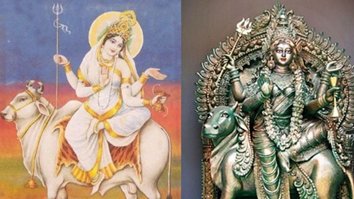
Kaalratri takes the form of Mahagauri. Mahagauri is the eighth form of Goddess Durga among the Navadurgas, representing purity, peace, and tranquillity. She is known for her fair, glowing complexion, symbolizing her superiority over darkness and impurities. Devotees seek her blessings for spiritual growth, inner peace, and the removal of obstacles. Mahagauri is depicted as a radiant figure, often wearing white garments and riding a white bull, “Maha” means great and “Gauri” means fair or bright, reflecting her radiant and pure nature, she is also considered the embodiment of wisdom and spiritual transformation. Her name, “Mahagauri,” literally translates to “extremely fair” or “greatly radiant,” reflecting her luminous complexion and purity. Mahagauri is traditionally associated with the Sahasrara Chakra, also known as the Crown Chakra, which is located at the top of the head. This chakra is considered the seat of spiritual awakening, enlightenment, and divine consciousness. Mahagauri’s energy is believed to activate and purify the Sahasrara Chakra, facilitating spiritual growth and connection with the divine.
Mahagauri, an aspect of the goddess Durga, depicts a woman who endured a transformative spiritual journey. She is characterized by her fair complexion, a symbol of purity, and her serene nature. Her story involves performing intense penance, which initially caused her skin to darken, followed by a cleansing by Lord Shiva, which restored her radiant glow. This transformation symbolizes the ability to shed burdens and emerge renewed through devotion and self-purification which comes when a lady who has seen adversities but has crossed them with grace and dignity.
Siddhidatri
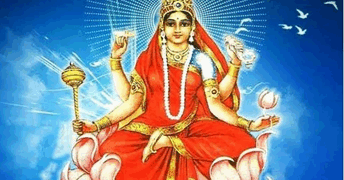
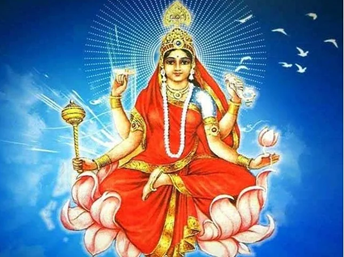
Mahagauri becomes Siddhidatri, the ninth form of the Hindu goddess Durga, who is worshipped for her supernatural powers and the giver of divine blessings. She is revered on the ninth day of Navaratri and is believed to grant devotees their desires, spiritual upliftment, and the achievement of both worldly and spiritual goals. “Siddhi” means supernatural power or perfection, while “Datri” means giver or bestower. She is often depicted sitting on a lotus or riding a lion. Devotees believe she grants blessings, fulfilment of desires, and provides spiritual upliftment. She symbolizes spiritual wisdom, execution, and divine blessings.
There are eight Siddhis in maa Sddhidatri: Anima which means the ability to become extremely small, one can become small to achieve big things in life. Here becoming small means minus ego. Mahima means the greatness or glory. Garima means bestower of perfection. Laghima is the ability to become extremely light or weightless, again this means to get rid of ego and become selfless. Prapti is the ability to acquire something. Prakamya is bestower of knowledge and refinement, Lishitva means someone who is distinguished and Vashitva means someone who is mesmerising.
Maa Siddhidatri is associated with both the Ajna chakra (third eye) and the Sahasrara chakra (crown chakra). The Ajna chakra is linked to intuition and foresight, while the Sahasrara chakra represents divine connection and unlimited knowledge. Siddhidatri is depicted in a way that suggests a woman who feels satisfied one who has fulfilled her desires. She is shown as a divine figure radiance, serenity and calmness, often seated on a lotus flower, which symbolizes purity and spiritual power.
Conclusion
Each avatar embodies different qualities as Shailaputri embodies supreme strength in oneself, Brahmacharini is purity and devotion of the soul, Chandraghanta is serenity and peace within, Kushmanda is creativity and nourishment, Skandamata is motherly love and protection of the family and mankind, Katyayani is courage, Kaalratri is destroyer of bad things, Mahagowri as wisdom and Siddhidatri as lady who has lived her life, fulfilled her desires and is full of insights who blesses people.