






































Corporate boundaries define the limits of an organization’s activities, responsibilities. It also limits to employee conduct, their physical and operational limits, communication rules, ethical considerations, and personal work-life balance. Organizational boundaries define the scope within which a company or entity operates, establishing the limits for responsibilities, control, and operations. These boundaries are crucial for effectively managing resources, implementing strategies, and ensuring regulatory compliance.
Organizational boundaries limit their capability to innovate. Lack of empowerment of employees, shortsighted leadership, resistance to change, procrastination and to adapt new technology organizations carry on sluggishly their business. The world is changing every moment. Innovation is needed for sustainability of organizations. Due to a combination of cultural, strategic, and structural barriers, such as a fear of failure, poor cross-functional collaboration, and a focus on short-term goals instead of long-term vision. Ineffective processes, inadequate resources, and a resistance to change also prevent new ideas from being developed and implemented.
Corporates face challenges such as market volatility, economic slump, intense competition, and challenges in securing funding and managing cash flow. Internal challenges include communication breakdowns, ensuring regulatory compliance, managing workforce dynamics, and the need to adapt to accelerated digital transformation and emerging technologies. Following are some common Factors:
Hierarchical Boundaries
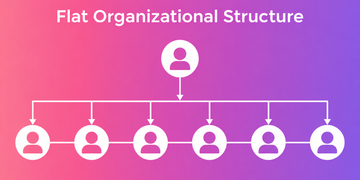
These boundaries are defined by levels of authority and management within the organizational structure. They designate who reports to whom and the levels of decision-making power. Complicated chains of command which can slow down decision-making. Inconsistencies in management at different levels can hinder work, it can create delays in communicating vertically through the levels and horizontally between teams. At times the hierarchical boundaries are less flexible to adapt and react to environmental and market pressures. There is a disconnect of employees from top-level management which can strain the employee-manager relationship due to lack of autonomy.
Functional Boundaries
These boundaries separate departments based on their specialized functions, such as marketing, finance, or human resources. The intention behind these boundaries is to foster expertise and efficiency within each function. But it can create departmental rivalries that can sometimes lead to disruption in the company’s overall structure. An inability for employees within one department to understand how their work relates to the efforts of other departments, or the company.
Geographical Boundaries
For organizations operating across multiple locations, geographical boundaries define operational units based on physical location, whether regional, national, or international. These boundaries often impact logistics, communication, and cultural considerations. Geographical constraints are physical distances, transportation infrastructure, legal frameworks, and cultural differences that may limit the ability of e-commerce companies to conduct business in certain areas. companies face is transportation infrastructure.
External Boundaries
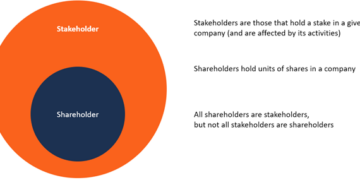
These are the boundaries that define the organization as a whole and separate it from its external stakeholders, such as customers, suppliers, competitors, and regulatory bodies. The significance of these boundaries lies in managing external relationships and adapting to the external environment. Businesses can’t control external factors but must respond to them. These political, economic, social, technological, environmental and competitive factors.
Control and ownership boundaries
This defines who owns the company, how that ownership is structured, and who holds control, typically by outlining the distribution of shares among different classes of shareholders like promoters, institutional investors, and individuals. As an organization expands quickly, its hierarchical structure may become inefficient, leading to bottlenecks and slower decision-making. Additionally, the sudden influx of new employees can create challenges in maintaining company culture and ensuring that all team members are aligned with the organization’s goals.
Open Innovation
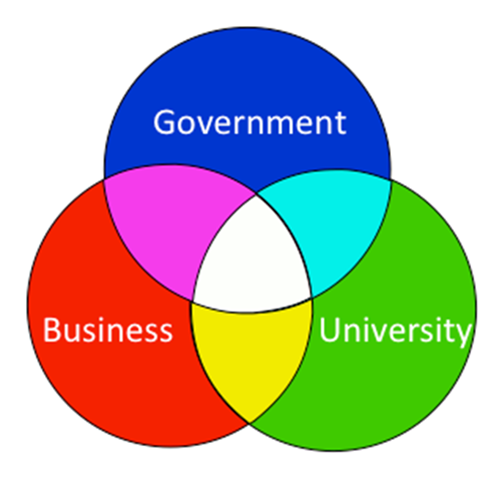
It is an important component of the business world because it’s what drives professionals to create new products, methods, services and standards that may affect the economy positively. Business innovation also helps ensure that a business stays competitive and acts as a leader in its industry. Open innovation is a strategic approach where organizations use external ideas, technologies, and knowledge, along with their internal R&D, to drive product and service development. Organizations give priority for innovation by using a wider network of partners, such as universities, startups, and customers, to accelerate progress, reduce costs, and access a richer pool of expertise. Institutions such as IITs, IIS, Department of Science and Technology, TIFR Etc.
Along the way, GE has invested heavily in open innovation and crowdsourcing as a tool for moving faster and smarter. They created a new system that breaks down the boundaries between their traditional businesses and target markets to create a connected and cohesive global knowledge exchange. More than ever before, each GE business shares expertise, technology, markets, and structure enabling more collaborative and meaningful research, innovation, and learning. Supporting this approach in a company as large, complex, and mature as GE was no easy task. Dyan Finkhousen was GE’s former Global Director of Open Innovation and Advanced Manufacturing, and Founder of GE GeniusLink and GE Fuse. She led this initiative through GE’s Centre of Excellence for open innovation and crowdsourcing, and in GLG’s Leading Learners video series she has discussed the impact of embracing new ways of learning on GE’s continued innovation.
Open innovation actively seeks external ideas, knowledge, and technologies to complement internal resources and capabilities. This model contrasts sharply with closed innovation, which relies solely on internal resources for product and service development. An innovation ecosystem is a combination of all the stakeholders that make choices influencing innovation-related outcomes and, consequently, the direction of innovation. An innovation ecosystem refers to a loosely interconnected network of companies and other entities that coevolve capabilities around a shared set of technologies, knowledge, or skills, and work cooperatively and competitively to develop new products and services.
At HUL, Unilever Ventures, the company’s corporate venture capital arm, is a key driver of its innovation strategy. By investing in high-potential startups, Unilever secures early access to disruptive technologies that enhance product development, supply chain efficiency, and sustainability.
AI’s role in innovation
AI is no longer optional it’s a part and parcel of an organization. if organizations want their business to innovate and compete, they must use AI. which requires a strategic approach and deeply understanding its impacts.
Procter & Gamble’s (P&G) open innovation is primarily executed through its “Connect + Develop” program, which seeks external partners, including corporations, startups, and academic institutions, to co-develop new products and technologies. This strategy aims to source up to 50% of its innovations from outside the company and was famously used to develop products like the Swiffer cleaning system and Pringles Prints. P&G also uses a digital hub to allow partners to submit ideas for technologies and products in specific business areas.
AI also improves sustainable business practices such as integrating renewable energy sources like solar and wind power by forecasting energy output based on weather forecasts and optimizing storage systems. By incorporating AI into your energy management strategies, not only can you improve operational efficiency and address climate risks but position your organization as a sustainability leader. AI is rapidly becoming an innovation driver in health care from diagnostic imaging to patient care management across hospitals, clinics, and research institutions.
Samsung categorizes its open innovation strategy into four parts: partnerships, accelerators, acquisitions, and ventures. As a partner, Samsung collaborates with other tech companies to find new opportunities within its existing product line. As an accelerator, Samsung looks for promising startups and provides them with an environment that will allow them to succeed. Samsung also acquires startups whose innovations align with the company’s focus areas.
AI is transforming retail and e-commerce by analysing browsing histories, purchase patterns, and demographics to better cater to customer needs. According to a McKinsey report, companies that excel in personalization generate 40 percent more revenue than competitors.
Flipkart demonstrates open innovation through various initiatives, including internal frameworks that encourage experimentation and the use of advanced technologies like AI for product discovery. It also collaborates with external partners, as seen in its Leap program for startups, and focuses on making detailed information accessible to empower teams to find new solutions, particularly in supply chain and logistics. The company’s approach is a combination of creating a culture that fosters internal creativity and leveraging external technology and talent.
What is 30% role in AI?
The 30% rule suggests that in most complex roles, about one third of tasks can be automated today with AI. The remaining work requires human expertise, context, and oversight. In healthcare, the 30% might be anomaly detection in scans.
While there is no company-wide “30% AI rule” at Coca-Cola, the number 30% has been referenced in relation to specific, successful AI-driven projects, including 30% profit growth: In early 2024, Coca-Cola’s CEO, James Quincey, attributed approximately 30% of the company’s gross profit growth in 2023 to robust AI-driven innovation in products, packaging, and processes. 30% boost in sales: By using AI to personalize recommendations, Coca-Cola and its partners have seen a 30% increase in sales of recommended products to retailers and consumers. A shift away from 30%: In 2019, Coca-Cola spent less than 30% of its media budget on digital channels. By 2024, that figure had increased to about 65%, a major shift enabled by its AI strategy.
In healthcare, the 30% might be glitch while detecting scans. In finance, it could be fraud alerts or first-pass modelling. In education, auto-grading quizzes and drafting lesson outlines. These tasks are structured and repetitive, which makes them ideal for machine support.
For example, Apollo Hospitals announced a strategic push toward AI integration to reduce staff workload, and other major chains like Fortis, Manipal, and Max Healthcare have also invested in AI-powered tools.

